
The producer of Fleabag and Baby Reindeer's tip for finding a hit? Don't look for one

At the Edinburgh Fringe, producer Francesca Moody offered a deliberately unfashionable answer to the entertainment industry’s search for the next breakout success: do not set out to find one. Moody, whose theatre work includes Fleabag and Baby Reindeer, spoke about the qualities that draw her to a performance at a festival built around risk, experimentation and an unusually crowded marketplace for new work.
Her track record gives that advice particular weight. Both productions connected with audiences far beyond their original stages, making Moody a closely watched figure for artists and producers hoping to understand how small live shows can gain a larger cultural life. Yet the premise of her approach is not that success can be mechanically predicted. It is that a producer’s attention should remain on the work in front of them rather than on an imagined future outcome.

That idea fits the Fringe’s basic character. Edinburgh’s annual festival is a place where a conventional commercial calculation can be difficult to make in advance. Performers arrive with polished productions, unfinished experiments, odd premises and ideas that may never comfortably fit an established category. The event’s recently completed 79th edition again showed how wide that range can be, with audiences moving between mainstream references, solo storytelling and formats that challenge expectations about what a stage show should be.
Among the examples on offer were a burlesque take on Shrek, a solo production drawing inspiration from the 2002 Disney Channel film Cadet Kelly, starring Hilary Duff, and an improvised show called David Elms Describes a Room. The title of the latter may sound deliberately plain, but the performance itself was presented as engaging. Together, such works underline how the festival can accommodate material that might appear too niche, too comic or too unconventional for a standard pitch.
For producers, that abundance turns Edinburgh into more than a programme of performances. It also functions as a live testing ground. Artists can be seen by potential collaborators, programmers and producers in the same environment as ordinary ticket buyers. A show does not need to arrive with a traditional career path or a neatly defined audience to become part of that conversation. In practice, a performance can serve as an introduction, a proof of concept or an invitation to develop a longer relationship.
Moody’s perspective places the emphasis on discernment rather than market forecasting. In a setting with countless competing choices, a producer may be looking for an immediate response to the specificity, energy or underlying promise of a piece, instead of asking whether it resembles the most recent commercial phenomenon. That distinction matters because creative work often changes shape after its first presentation, and the reasons people connect with it may not be obvious before it reaches them.

There is also a practical caution in the advice. A festival appearance is not a guarantee that a production will travel, expand or reach a mass audience. Most shows, even those with strong reactions in Edinburgh, will not follow the trajectory of the best-known titles associated with Moody. The environment can reveal talent and generate attention, but it cannot remove the uncertainty that accompanies new work or the many decisions that follow a successful run.
That uncertainty is part of what keeps the Fringe useful to the industry. A festival dominated only by attempts to reproduce familiar successes would leave less room for surprising voices and unusual formats. Moody’s position suggests that the better question may be whether a performance feels worth supporting on its own terms. If that judgment is sound, wider recognition can remain a possibility without becoming the sole standard by which a show is evaluated.
A photograph from the festival captured Moody in Edinburgh during the summer of 2025. As the Fringe moves beyond its latest edition, the next challenge for artists and producers will be deciding which discoveries deserve further investment and attention. The festival’s appeal, however, rests partly on the fact that those decisions begin with work that cannot always be reduced to a formula for a hit.

Source: NPR World
Related articles

Zelenskyy accuses Russia of using cluster warheads in deadly strikes
Russia launched the strikes on Ukraine less than a day after negotiations to end the war, which also involved the United States, ended in St. Petersburg.

Create AI images with your own API key
aixipi runs on desktop/web, uses your own model API balance, and avoids subscription lock-in.
Try aixipi →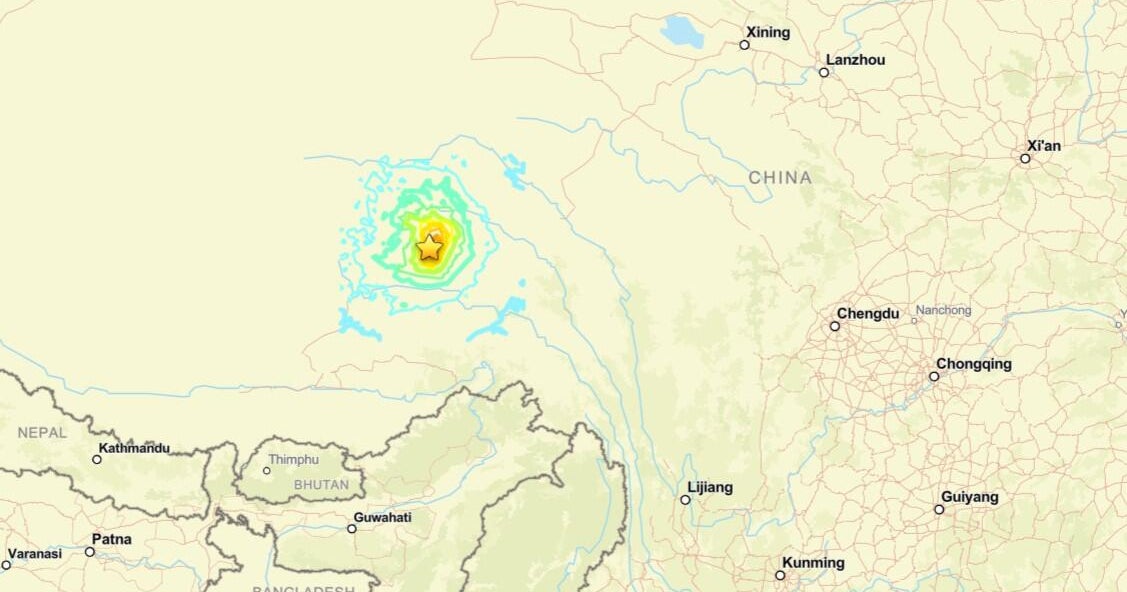
At least 16 dead when powerful 7.0 magnitude earthquake strikes Tibet
It was the biggest earthquake in the region in the last five years, China

See how Big Tech is transforming Spain's landscape
A drought-stricken region of northeast Spain has become a focus for American companies searching for locations to place their data centers.