
The Tasmanian Tiger Was Branded a Livestock Killer. New Research Challenges That Myth
A new study is challenging one of Tasmania’s most enduring wildlife stories: that the thylacine, commonly called the Tasmanian tiger, was a major threat to farm animals. Researchers examining the extinct marsupial’s skulls concluded that its bite was better adapted to quickly seize smaller prey than to overpower sheep, cattle or other large livestock.
The findings, published August 31 in Nature Communications, point to an animal with a hunting style quite different from the fearsome predator described by many European settlers. The thylacine appears to have been equipped to catch prey in the small-to-medium size range, including animals such as bandicoots. Its jaws, the researchers say, were not especially suited to bringing down substantially larger animals.
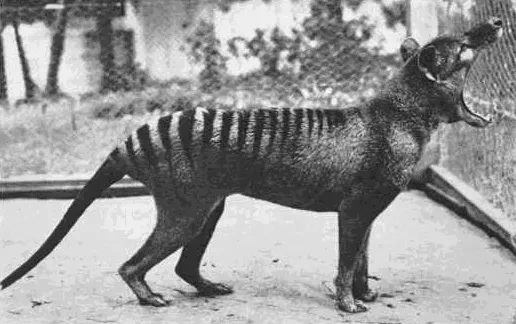
That conclusion revisits a belief that had severe consequences. When European colonists arrived in Tasmania roughly two centuries ago, thylacines became associated with danger to newly established livestock holdings. The striped marsupials were widely viewed as animals likely to kill sheep and cattle, and that suspicion helped shape official policy as well as public attitudes.
Government bounty programs gave people a financial reason to kill thylacines. The campaign intensified pressure on a species already caught in a changing colonial landscape, and settlers killed large numbers of the animals. The thylacine was eventually driven to extinction, leaving behind museum specimens, photographs and a reputation that has continued to influence how it is remembered.
Vera Weisbecker, an evolutionary biologist at Flinders University and the study’s lead author, said the research disputes the idea that thylacines were inherently devastating livestock hunters. In a university statement, she described that image as a misconception that contributed to the species’ disappearance. The new work places the animal’s likely diet closer to smaller native prey than to the farm animals that colonists feared for.
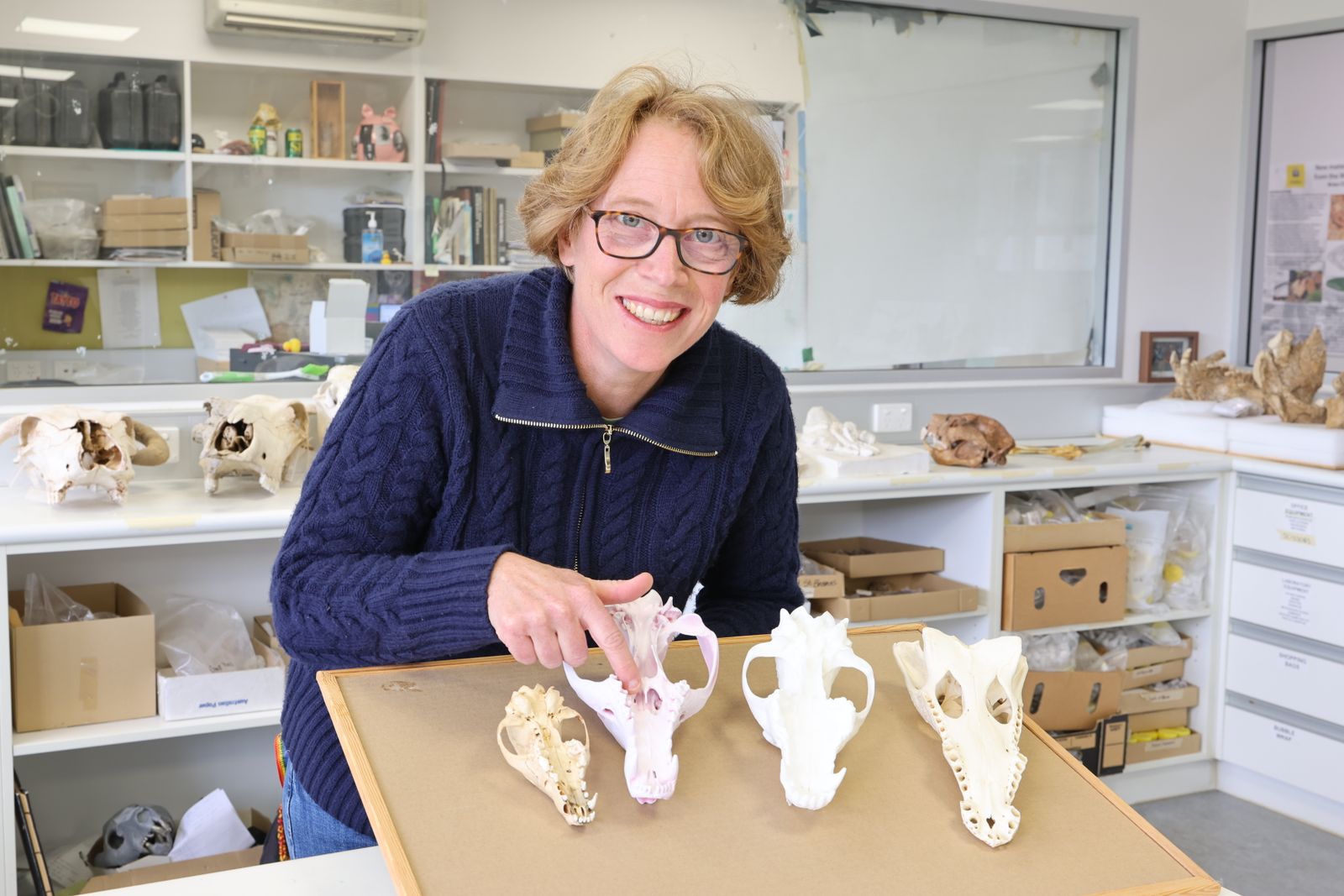
The study focuses on skull evidence, using the structure of the thylacine’s head to assess what kind of biting and prey capture it could support. The researchers compared the thylacine’s upper jaw with models representing a wolf, a fox and a crocodile. Weisbecker was photographed with a thylacine snout and those comparative jaw models, illustrating the anatomical approach behind the analysis.
The distinction matters because a powerful snapping bite can be effective without being designed for the largest available prey. Catching and restraining a bandicoot presents a very different physical challenge from attacking a sheep or a cow. The research suggests that the thylacine’s anatomy aligned more closely with the former task, complicating the historical assumption that it was built to raid livestock.
The evidence does not erase the fact that colonists believed their animals were at risk, nor does it change the historical outcome of bounty-driven killing. It does, however, separate that fear from the question of what the thylacine’s skull anatomy indicates about its usual prey. The study’s conclusion is framed as a challenge to the old account, rather than a claim that every reported concern from the period can be independently resolved by skull evidence alone.
For a species long defined by extinction and accusation, the research offers a different way to examine the record: through the biology of the animal itself. Future discussion will likely center on how this anatomical evidence reshapes the thylacine’s place in Tasmania’s history, and on the broader lesson that beliefs about wildlife can carry lasting consequences when they guide public policy.

Source: Smithsonian Magazine
Related articles

Immerse Yourself in the Cosmos at Frank Lloyd Wright's Only Planetarium, Recently Restored to Its Former Glory in Florida
Completed in 1958, the domed building is located on the campus of Florida Southern College, home to 13 Wright-designed buildings, the world's largest single-site collection of the architect's work

Play Tractor online with friends — free
Real-time Sheng Ji / Tractor for 3–5 players, with complete bidding and trump rules across web, iOS and Android.
Play bidfive →
A Team of Astronomers Thinks They Have Identified the Exact Night Sky That Inspired Vincent van Gogh's 'Starry Night.' Not Everyone Is Convinced
Very few night skies seen from the south of France during the summer of 1889 would match the scene on van Gogh's canvas. A new study argues that it could have been July 22

'Pretty Boy' Floyd, One of the Most Notorious Outlaws of the Great Depression, Was Shot and Killed in an FBI Raid 92 Years Ago
Some Americans lauded the 30-year-old bank robber as a Robin Hood-esque folk hero. Others castigated him as a violent criminal whose misdeeds were emblematic of the troubled era

GTA 6 guides, updates and practical reference
Explore a Chinese GTA 6 guide library covering the release, map, characters, missions, vehicles and weapons.
Browse guides →
Create AI images with your own API key
aixipi runs on desktop/web, uses your own model API balance, and avoids subscription lock-in.
Try aixipi →