
These Snakes Can Cartwheel Away From Danger. Scientists Just Uncovered How the Slithering Creatures Perform Their Acrobatic Rolls
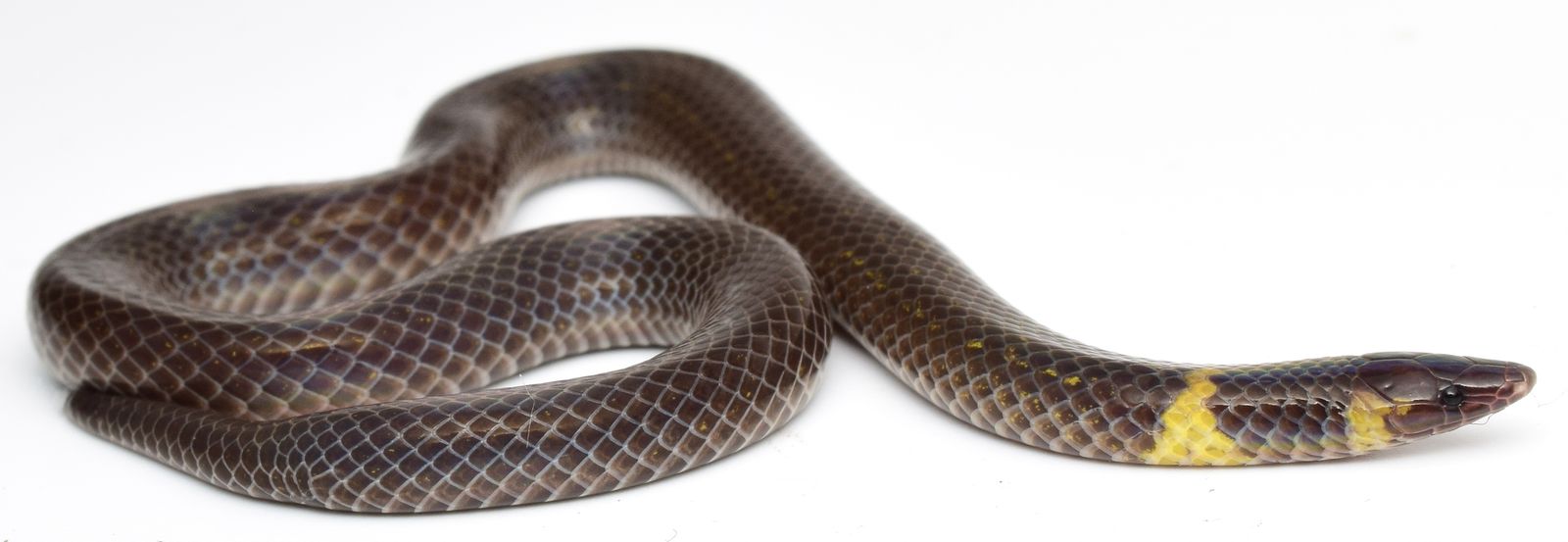
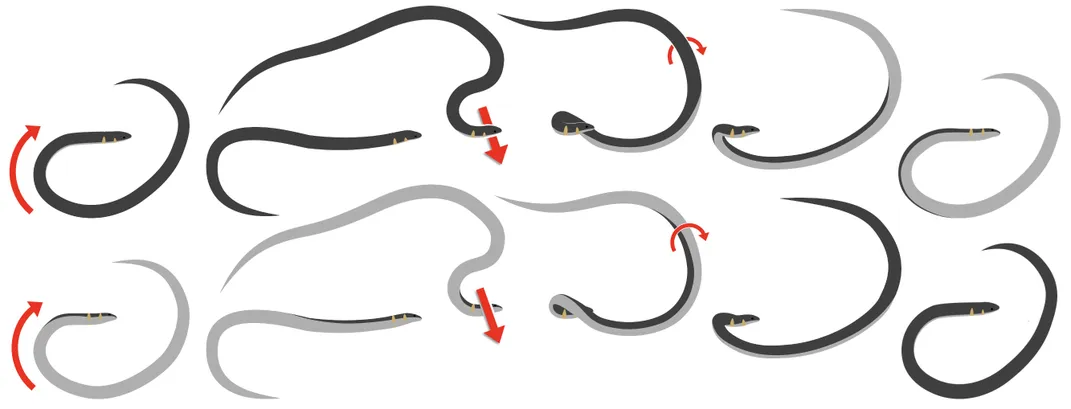
A new study has examined one of the most unusual escape moves in the snake world: small Southeast Asian dwarf reed snakes that can throw themselves into rapid rolling motions when danger closes in. Rather than simply fleeing by slithering, members of the Pseudorabdion genus can curl and tumble away in a cartwheel-like sequence, gaining speed as they leave a threat behind.
The research, published October 19 in Current Biology, offers a closer look at how the snakes manage the striking maneuver. Scientists had previously documented the behavior after seeing a snake roll down a road in northwestern Malaysia several years ago. The new work moves beyond that earlier observation, studying the animals’ movement in greater detail and examining how such a small reptile can turn its body into a fast-moving wheel.

During these rolling escapes, the snakes can travel at reported peak speeds ranging from 3.8 to 8.3 miles per hour. For an animal that normally moves close to the ground and is only a few inches long, that burst of motion can rapidly increase the distance between it and a potential attacker. The behavior appears to be an emergency response rather than an everyday form of travel.
Dwarf reed snakes are generally difficult to spot. They spend much of their time concealed beneath fallen leaves, logs and rocks, where their small size and secretive habits help keep them out of sight. Many are active at night, further limiting encounters with people and other animals. But concealment is not a complete defense when a predator discovers their hiding place.
Pseudorabdion longiceps, one of the species associated with the behavior, is a slender snake found in Southeast Asia and reaches no more than about nine inches in length. Its modest size leaves it exposed to a range of predators, including birds and other snakes. One known risk comes from the striped coral snake, illustrating why an unusually fast escape strategy may matter even for animals that are well adapted to staying hidden.
The study considered several species within the Pseudorabdion genus, including P. saravacense. Looking across related snakes gives researchers a broader basis for investigating whether rolling is tied to shared body features, defensive pressures or particular environments. It also places the spectacle of a cartwheeling snake within the larger story of how closely related animals can develop specialized responses to danger.
The discovery has drawn attention because rolling is a dramatic departure from the motion most people associate with snakes. Slithering remains the familiar image, but snakes already use their bodies in varied ways depending on terrain, habitat and circumstance. In this case, the animal’s flexible form is not merely pushing against the ground; it becomes part of a rapid, whole-body escape sequence.
There is still reason for caution in treating the behavior as a universal snake tactic. The observations and new analysis concern a limited group of small reed snakes, not snakes as a whole. Their cartwheel-like departure may be especially useful in the situations these animals face, while other species rely on camouflage, speed, venom, defensive displays or different routes to safety. Future work may clarify how widespread this rolling ability is among related species and under what conditions it is triggered.
For now, the study provides a clearer account of an escape behavior that first seemed almost implausible when it was witnessed on a Malaysian road. The findings underscore how much remains to be learned about overlooked animals that spend most of their lives beneath forest debris. A snake that usually survives by staying unseen can, when exposed, make a startlingly visible exit.
Source: Smithsonian Magazine
Related articles

Immerse Yourself in the Cosmos at Frank Lloyd Wright's Only Planetarium, Recently Restored to Its Former Glory in Florida
Completed in 1958, the domed building is located on the campus of Florida Southern College, home to 13 Wright-designed buildings, the world's largest single-site collection of the architect's work

Play Tractor online with friends — free
Real-time Sheng Ji / Tractor for 3–5 players, with complete bidding and trump rules across web, iOS and Android.
Play bidfive →
A Team of Astronomers Thinks They Have Identified the Exact Night Sky That Inspired Vincent van Gogh's 'Starry Night.' Not Everyone Is Convinced
Very few night skies seen from the south of France during the summer of 1889 would match the scene on van Gogh's canvas. A new study argues that it could have been July 22

'Pretty Boy' Floyd, One of the Most Notorious Outlaws of the Great Depression, Was Shot and Killed in an FBI Raid 92 Years Ago
Some Americans lauded the 30-year-old bank robber as a Robin Hood-esque folk hero. Others castigated him as a violent criminal whose misdeeds were emblematic of the troubled era

GTA 6 guides, updates and practical reference
Explore a Chinese GTA 6 guide library covering the release, map, characters, missions, vehicles and weapons.
Browse guides →
Create AI images with your own API key
aixipi runs on desktop/web, uses your own model API balance, and avoids subscription lock-in.
Try aixipi →