
This Cubist Painting With a Mysterious Provenance Hung in the Art Institute of Chicago for Decades. Now, the Museum Will Return It to Its Rightful Jewish Heirs

The Art Institute of Chicago plans to give back Woman With a Fan, a 1913 work by Jean Metzinger, after an investigation concluded that the painting was sold from its Jewish owner’s collection under Nazi coercion during the Second World War. The decision reverses the long public display of a canvas that entered the museum as a gift and whose path through the war years had remained unresolved for decades. It also brings a once-obscure ownership question to a conclusion in favor of the former collector’s descendants.
Metzinger painted the picture in Paris at a formative moment for Cubism. The early 20th-century work belongs to the period when artists in the French capital were reshaping how figures, space and perspective could be represented. Its art-historical importance sits alongside a far more troubling history: the work’s later ownership record contained gaps, particularly for the years in which Jewish collectors and dealers faced state-backed dispossession. Such missing records often complicate attempts to establish the circumstances in which works changed hands.

The museum said new technical research supplied the missing connection. Infrared examination of the reverse of the canvas identified evidence tying the painting to a Jewish collector. That finding gave researchers their strongest basis so far for determining that the work had been in that collector’s possession before it was taken into the chain of wartime forced sales. The discovery emerged from close study of the object itself, rather than from a newly complete paper trail.
For restitution cases, an incomplete provenance is not merely a cataloguing problem. Nazi rule created conditions in which sales could appear on paper as ordinary transactions even when owners had little or no meaningful choice. Auction records, ownership marks and material clues on an artwork can therefore become crucial in reconstructing whether a transfer reflected consent or persecution. The distinction matters because a sale conducted amid targeted persecution cannot be assessed like a routine commercial exchange.
Woman With a Fan had been at the Chicago museum after Mr. and Mrs. Sigmund Kunstadter donated it. The gift allowed visitors to encounter a notable early Cubist painting, but it did not settle the question of who had held it before the war or how it had left that person’s collection. The newly established link has changed the institution’s assessment of that history. Its return means that public possession of the painting no longer overrides the museum’s finding about its wartime loss.
The Art Institute’s provenance research department led the work that resulted in the decision. Its executive director, Jacques Schuhmacher, said the return reflects a commitment to act when further research makes an artwork’s ownership history clearer. The statement frames the case as one in which newly available evidence required a fresh institutional response rather than reliance on earlier, incomplete records.
The return will go to the former owner’s family, described by the museum as the rightful Jewish heirs. The announcement addresses ownership of the painting, not its artistic significance: Metzinger’s place in the development of Cubism remains part of why the canvas has mattered to audiences and scholars. What has changed is the museum’s conclusion about the circumstances that separated it from its earlier collector.
Infrared analysis does not by itself narrate every step in an object’s history, and the surviving wartime record remains shaped by the gaps and disruptions of the era. Still, in this case the museum regards the evidence on the back of the painting as sufficiently persuasive when considered with the broader research. The decision underscores how technical tools can reopen provenance questions once thought impossible to resolve.
The announcement does not specify a timetable for the physical handover or what the heirs may decide to do with the work once it is returned. Those are the next practical questions. For the museum, the immediate consequence is that a painting long associated with its collection will leave it; for the family, the return recognizes a loss connected to Nazi persecution that persisted across generations.
Source: Smithsonian Magazine
Related articles

Immerse Yourself in the Cosmos at Frank Lloyd Wright's Only Planetarium, Recently Restored to Its Former Glory in Florida
Completed in 1958, the domed building is located on the campus of Florida Southern College, home to 13 Wright-designed buildings, the world's largest single-site collection of the architect's work

Play Tractor online with friends — free
Real-time Sheng Ji / Tractor for 3–5 players, with complete bidding and trump rules across web, iOS and Android.
Play bidfive →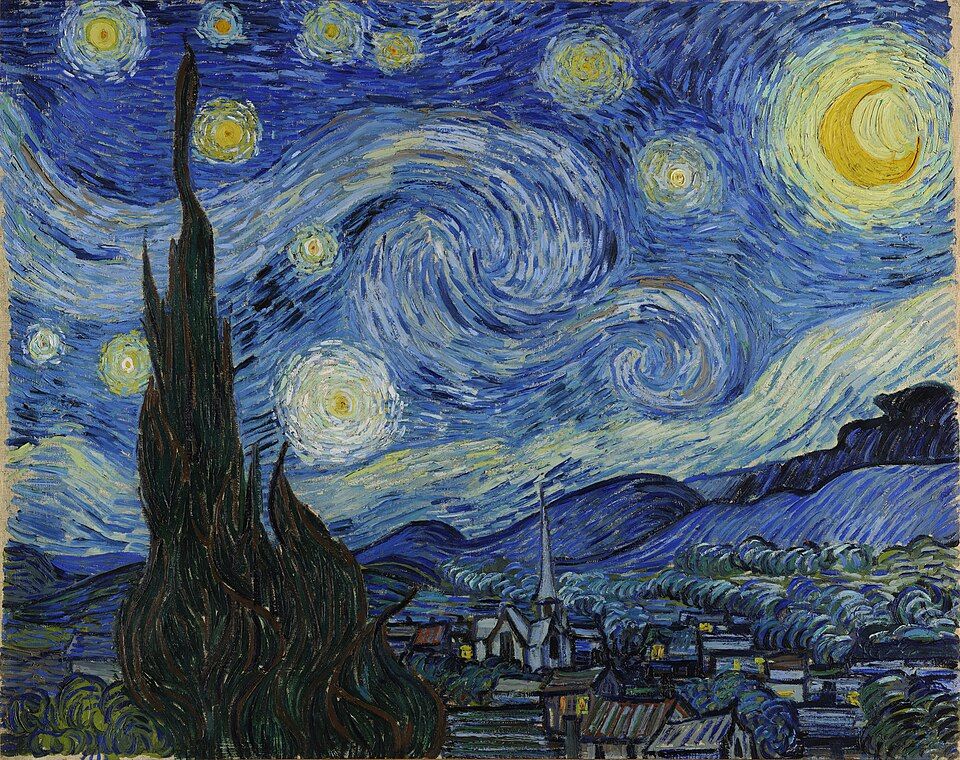
A Team of Astronomers Thinks They Have Identified the Exact Night Sky That Inspired Vincent van Gogh's 'Starry Night.' Not Everyone Is Convinced
Very few night skies seen from the south of France during the summer of 1889 would match the scene on van Gogh's canvas. A new study argues that it could have been July 22

'Pretty Boy' Floyd, One of the Most Notorious Outlaws of the Great Depression, Was Shot and Killed in an FBI Raid 92 Years Ago
Some Americans lauded the 30-year-old bank robber as a Robin Hood-esque folk hero. Others castigated him as a violent criminal whose misdeeds were emblematic of the troubled era

GTA 6 guides, updates and practical reference
Explore a Chinese GTA 6 guide library covering the release, map, characters, missions, vehicles and weapons.
Browse guides →
Create AI images with your own API key
aixipi runs on desktop/web, uses your own model API balance, and avoids subscription lock-in.
Try aixipi →