
This Dog Learned to Sniff Out a Slimy Marine Invader Called 'Sea Vomit'—a Skill That Earned Her the Animal of the Year Award
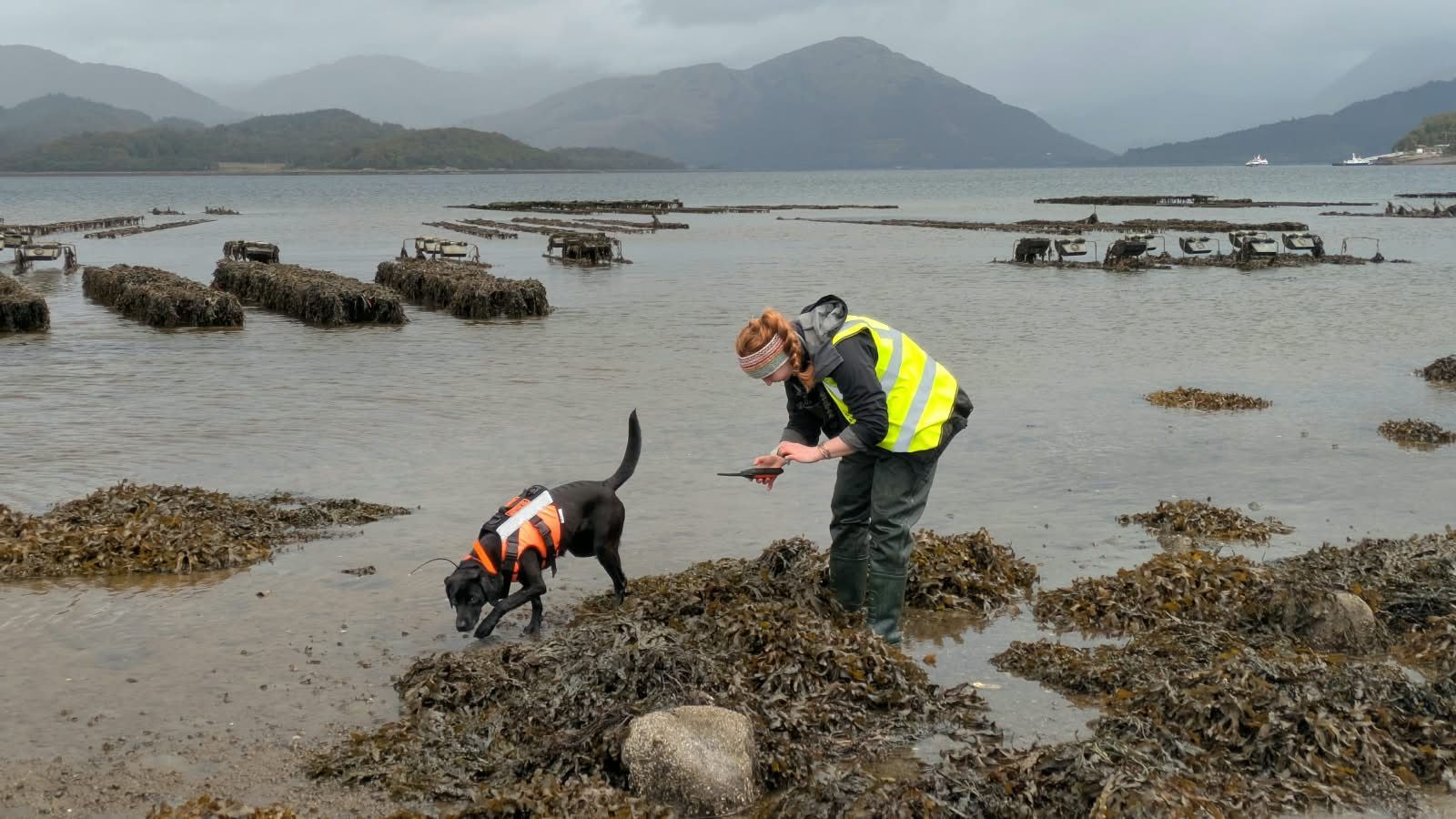
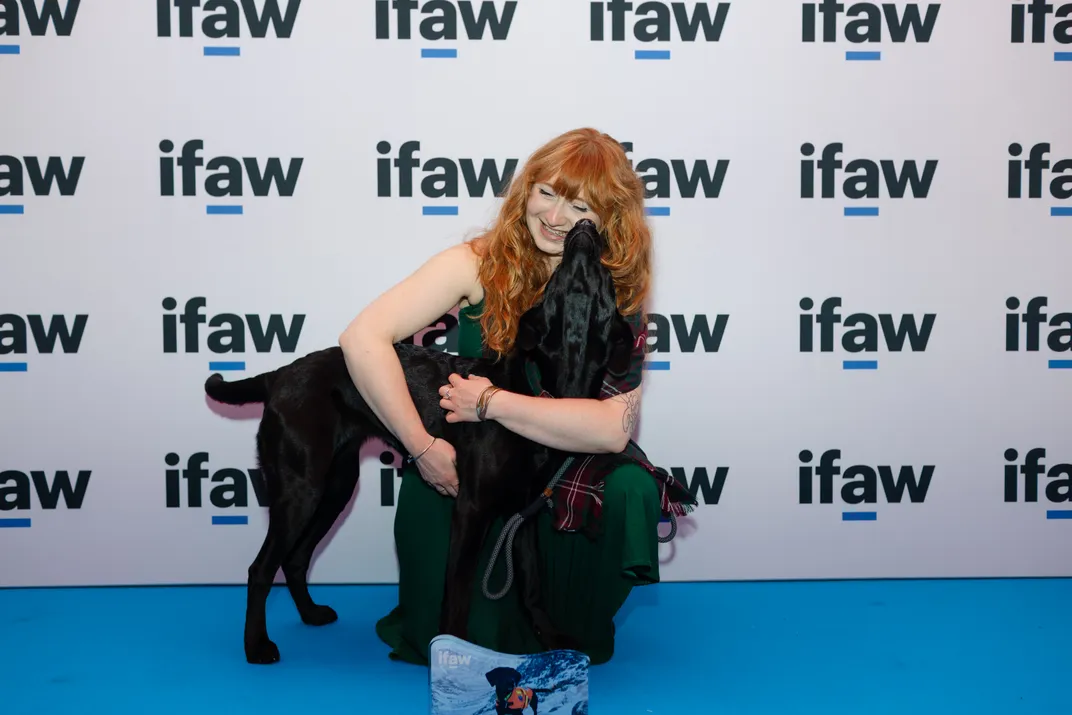
A black Labrador from the Scottish Highlands has received the International Fund for Animal Welfare’s Animal of the Year award after developing an unusual conservation skill: locating an invasive marine organism sometimes called “sea vomit.” The six-year-old dog, Sgiath, was honored for detecting colonies of carpet sea squirt, a species that has raised concern in coastal waters around Britain and Ireland as well as in other areas where it has appeared.
Sgiath is thought to be the first dog taught specifically to find the animal, whose formal name is Didemnum vexillum. The nickname reflects the organism’s soft, spreading appearance, but the stakes behind the search are more serious. Carpet sea squirt can form extensive colonies that compete with local marine life and create problems for fisheries. Its growth can also affect structures used along the coast.

The award places a working detection dog at the center of a marine-conservation effort more commonly associated with boats, divers and visual inspections. For Sgiath’s handler, marine ecologist Texa Sim, the task began after the dog had already been prepared for mountain-rescue work. That earlier training gave her a foundation for focused scent work before she was introduced to the odor linked to the invading sea squirt.
Since then, Sgiath has identified hundreds of colonies, according to reporting cited by the award organizers. Sim told the BBC that the dog has not missed a colony once she has picked up its scent. The searches are not always straightforward: the target may be concealed under seaweed or located on difficult surfaces, including pontoons and cages used for oyster cultivation.
That ability matters because colonies can be easy to overlook when coastlines are inspected by eye alone. A dog that can signal the presence of the species through natural or accumulated material could help point field teams toward places that warrant a closer look. The recognition does not mean detection alone solves the invasion; finding a colony is an early step, while decisions about monitoring or any response still depend on conservation professionals and local conditions.
IFAW framed the award as recognition of a new application for canine scent detection. Sharon Livermore, the organization’s marine-conservation director, said Sgiath’s work shows how dogs could contribute to conservation research in ways not previously expected. The distinction is therefore as much about the method as the individual dog: it highlights whether scent training can add another tool for spotting marine threats before they become harder to track.
The wider concern is not limited to a single shoreline. Carpet sea squirt colonies can put pressure on native species while also posing risks to fishing and aquaculture operations. Where an invasive organism spreads across man-made coastal equipment and living habitats, early knowledge of its location can be valuable. It may allow researchers and managers to build a clearer picture of its distribution, though the award announcement does not claim that Sgiath’s work has halted its spread.
Sgiath’s achievement also shows the long path behind a headline-grabbing task. The result came from adapting rescue-dog training to a specialized environmental purpose, then testing that skill in complicated coastal settings rather than a controlled field. What to watch next is whether similar teams are trained and whether their results can be integrated with established marine surveys. For now, the Labrador’s award recognizes a proven detector whose nose has found an invasive organism hidden in plain sight.
Source: Smithsonian Magazine
Related articles

Immerse Yourself in the Cosmos at Frank Lloyd Wright's Only Planetarium, Recently Restored to Its Former Glory in Florida
Completed in 1958, the domed building is located on the campus of Florida Southern College, home to 13 Wright-designed buildings, the world's largest single-site collection of the architect's work

Play Tractor online with friends — free
Real-time Sheng Ji / Tractor for 3–5 players, with complete bidding and trump rules across web, iOS and Android.
Play bidfive →
A Team of Astronomers Thinks They Have Identified the Exact Night Sky That Inspired Vincent van Gogh's 'Starry Night.' Not Everyone Is Convinced
Very few night skies seen from the south of France during the summer of 1889 would match the scene on van Gogh's canvas. A new study argues that it could have been July 22

'Pretty Boy' Floyd, One of the Most Notorious Outlaws of the Great Depression, Was Shot and Killed in an FBI Raid 92 Years Ago
Some Americans lauded the 30-year-old bank robber as a Robin Hood-esque folk hero. Others castigated him as a violent criminal whose misdeeds were emblematic of the troubled era

GTA 6 guides, updates and practical reference
Explore a Chinese GTA 6 guide library covering the release, map, characters, missions, vehicles and weapons.
Browse guides →
Create AI images with your own API key
aixipi runs on desktop/web, uses your own model API balance, and avoids subscription lock-in.
Try aixipi →