
This Mysterious Medieval Manuscript Has Stumped Scholars for Well Over a Century. Could Its Pages Have Been Bound Out of Order This Whole Time?
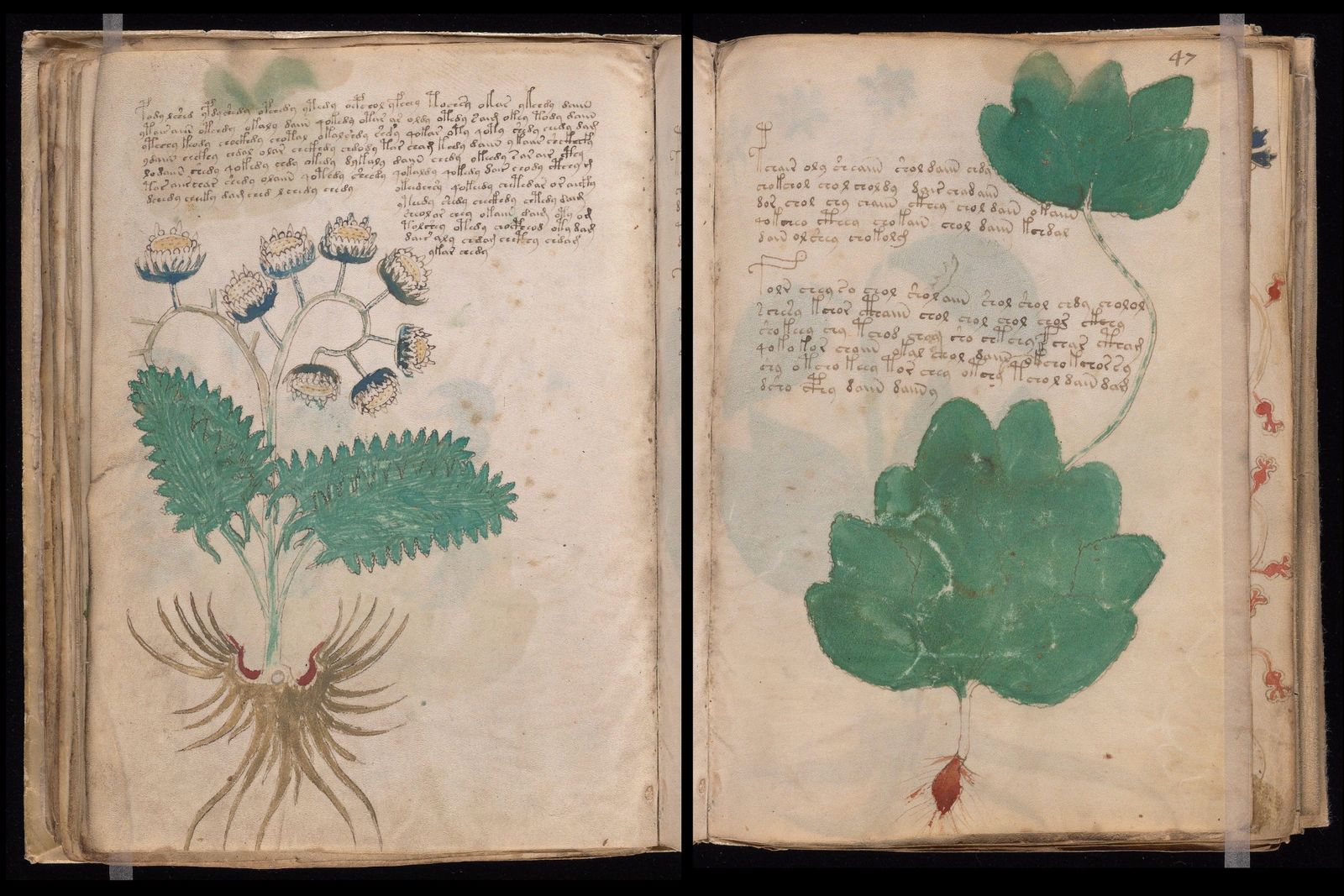
A newly published study has raised a basic but consequential question about the Voynich Manuscript: are readers encountering its leaves in the wrong order? Researchers argue that the puzzling medieval volume may have been assembled incorrectly, a possibility that could alter how specialists approach one of the most persistently undeciphered texts in manuscript studies.
The proposal appears in Digital Medievalist and focuses not on a translation of the manuscript’s unusual writing, but on its physical construction. The authors say the evidence strongly suggests that the present binding does not preserve the order intended for the pages. If that assessment holds, an obstacle to interpreting the document may have been built into the object itself.
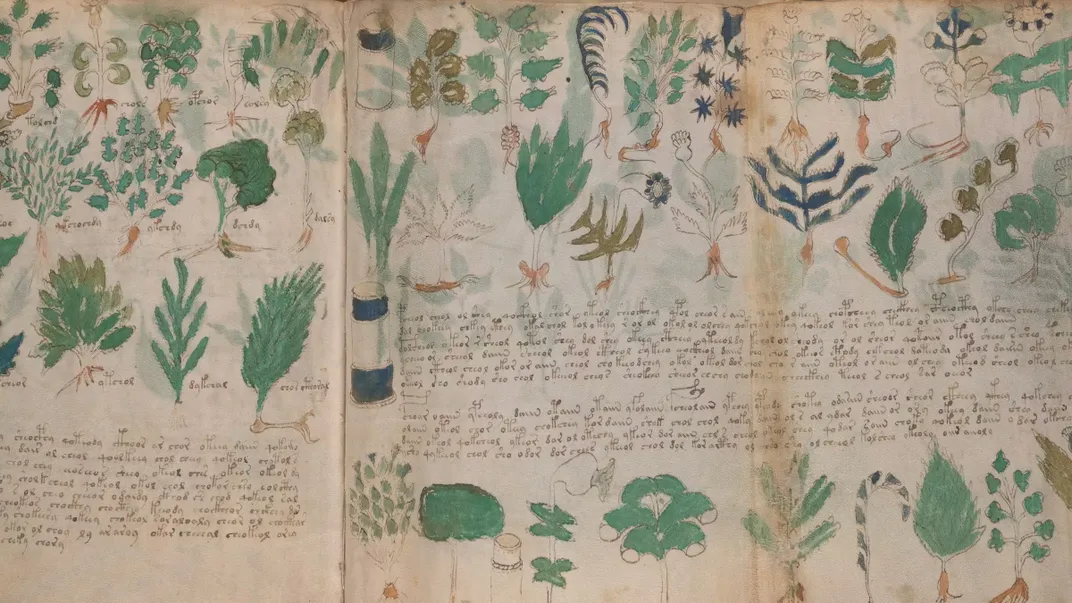
For more than a century, the manuscript has resisted repeated attempts at explanation. Its text has drawn the attention of scholars and codebreakers, yet no agreed reading has emerged. The new research does not claim to solve that problem. Instead, it asks whether efforts to find patterns may have been working from a sequence that was never meant to guide a reader.
The manuscript has been understood as a work produced in 16th-century Europe by more than one scribe. That history already makes it a complicated object to study, because its writing does not appear to come from a single hand. A disruption in the order of the sheets would add another layer of difficulty: changes in handwriting or content could seem more meaningful, or less meaningful, when viewed through an inaccurate sequence.
At present, the volume is bound as a quire, a format made by gathering folded leaves and sewing them into a small book. The study offers a different reconstruction of its earlier form. It proposes that the manuscript began as separate bifolia: individual sheets folded once, each creating two leaves, then placed together in an intended progression.
That distinction is more than a technical point about bookmaking. A quire presents its pages as parts of a fixed gathering, while independently arranged folded sheets could be moved, stacked or joined differently. The authors’ argument is that the present arrangement may not match the sequence in which the bifolia were supposed to be read. In that scenario, adjacent pages today may not have originally belonged beside one another.
Lisa Fagin Davis, executive director of the Medieval Academy of America and a co-author of the study, said the implications extend to earlier work on the manuscript. “Any research” based on the existing order, she told Gizmodo, may need fresh examination if the book has been assembled out of sequence. That would affect approaches that treat the current progression as evidence in itself.
The study therefore shifts attention from the manuscript’s mysterious language alone to the chain of decisions that turned loose material into the book now being examined. It also offers a caveat to claims built around apparent runs, transitions or divisions in the text: those features may need to be tested against a revised physical order before they can be relied upon.
The next question is whether other researchers will accept the proposed reconstruction and apply it to their own investigations. A reordered manuscript would not automatically reveal what its script says or settle the questions that have surrounded it for generations. But it could change the starting map for future work, asking investigators first to establish how the pages belong together before drawing conclusions from the path they appear to follow.
Source: Smithsonian Magazine
Related articles

Immerse Yourself in the Cosmos at Frank Lloyd Wright's Only Planetarium, Recently Restored to Its Former Glory in Florida
Completed in 1958, the domed building is located on the campus of Florida Southern College, home to 13 Wright-designed buildings, the world's largest single-site collection of the architect's work

Play Tractor online with friends — free
Real-time Sheng Ji / Tractor for 3–5 players, with complete bidding and trump rules across web, iOS and Android.
Play bidfive →
A Team of Astronomers Thinks They Have Identified the Exact Night Sky That Inspired Vincent van Gogh's 'Starry Night.' Not Everyone Is Convinced
Very few night skies seen from the south of France during the summer of 1889 would match the scene on van Gogh's canvas. A new study argues that it could have been July 22

'Pretty Boy' Floyd, One of the Most Notorious Outlaws of the Great Depression, Was Shot and Killed in an FBI Raid 92 Years Ago
Some Americans lauded the 30-year-old bank robber as a Robin Hood-esque folk hero. Others castigated him as a violent criminal whose misdeeds were emblematic of the troubled era

GTA 6 guides, updates and practical reference
Explore a Chinese GTA 6 guide library covering the release, map, characters, missions, vehicles and weapons.
Browse guides →
Create AI images with your own API key
aixipi runs on desktop/web, uses your own model API balance, and avoids subscription lock-in.
Try aixipi →