
Unsealed for the First Time in 600 Years, This Tomb in Peru Was Just Declared the 'Discovery of the Decade'
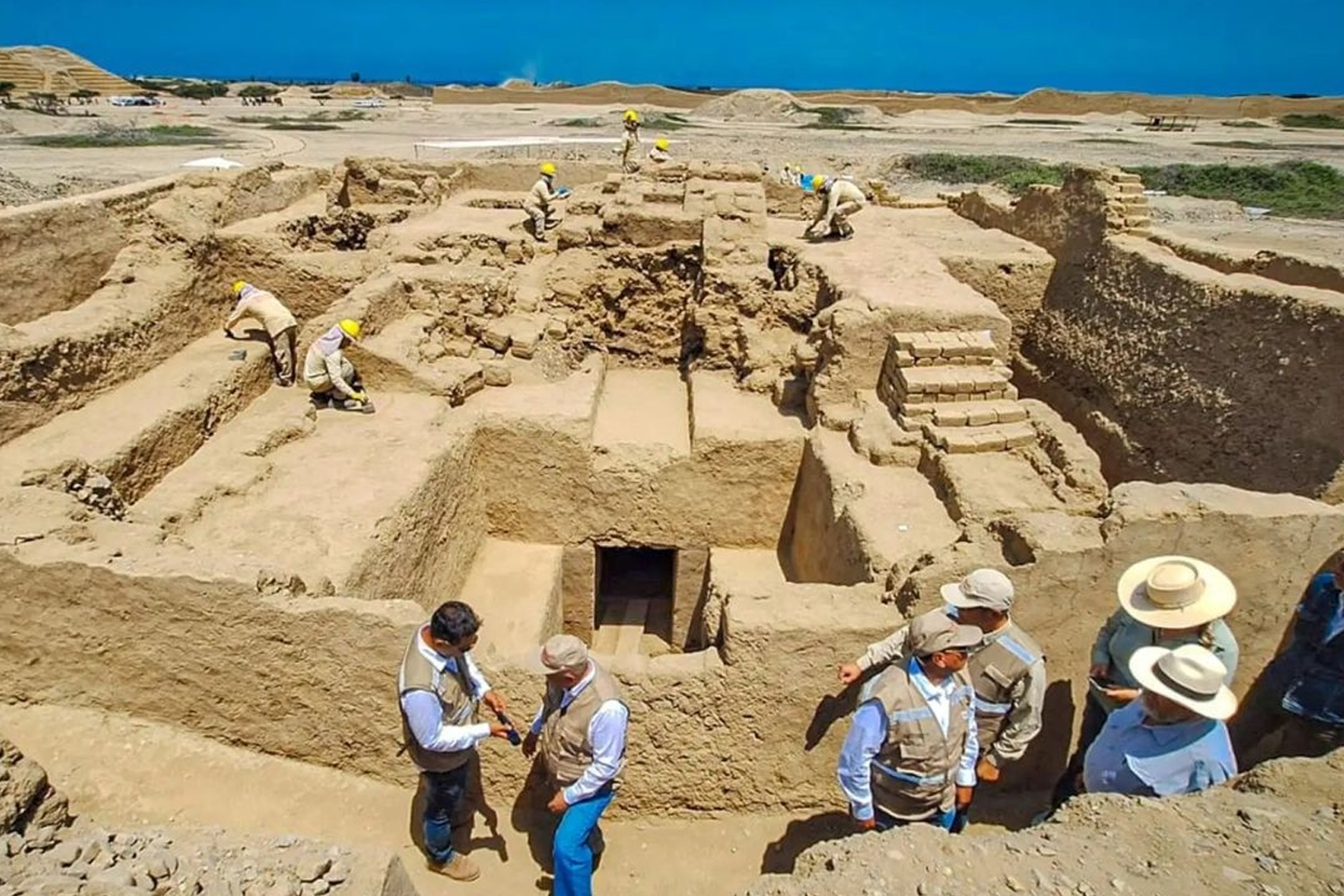
Archaeologists working at Chan Chan in Peru have opened a rare window onto the final centuries of the Chimú civilization: a high-status burial structure that appears to have escaped major disturbance for nearly six hundred years. The newly revealed mausoleum contained the remains of no fewer than 38 people and a substantial collection of objects placed with the dead, a combination that has prompted descriptions of the excavation as a defining archaeological find of the decade. Its importance rests not only on what was recovered, but on the survival of the setting in which it was found.
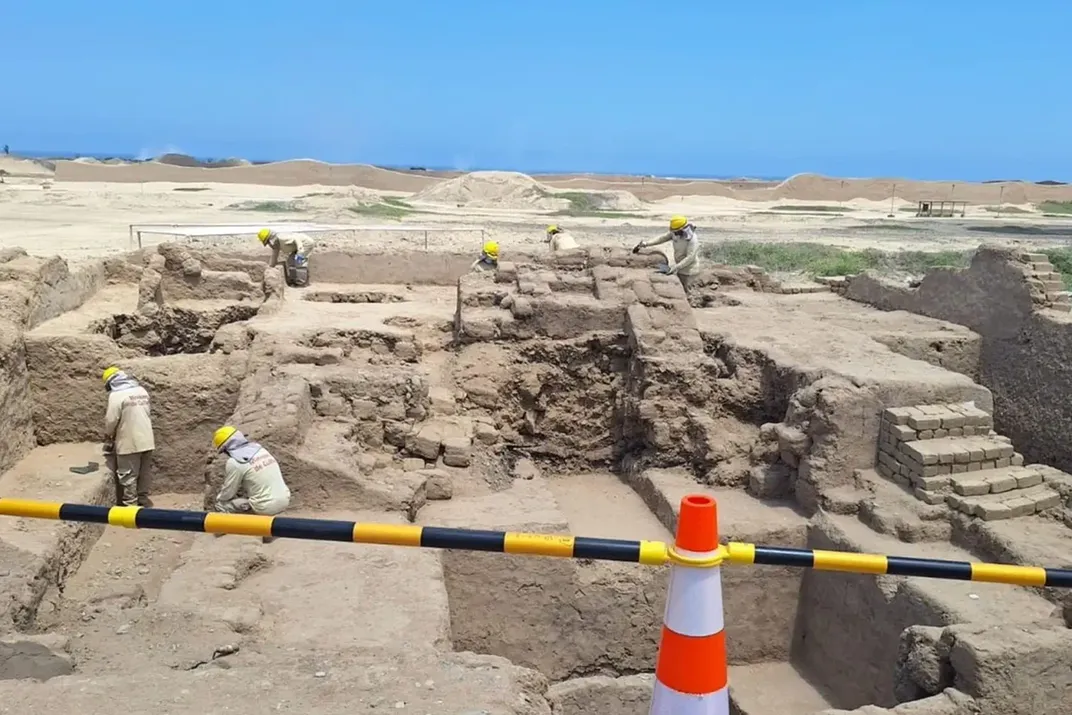
The discovery was made at Chan Chan, the former seat of the pre-Inca Chimú state and a UNESCO World Heritage Site. Excavators located the tomb’s entryway earlier this year only after working through accumulated sand, earth and stones. What lay beyond was not simply another grave, but a funerary platform whose central chamber had remained closed since the late pre-Hispanic period. The opening gives researchers access to a space that had not been broadly exposed or rearranged by later visitors.

Its date is crucial to the significance of the find. The complex belongs to the years around the Inca expansion into the region in the middle of the 1400s, or possibly shortly beforehand. That places it at a moment when political power in the area was changing hands. A burial from that era has survived both the colonial period and more recent waves of theft with its internal arrangement largely preserved. Such continuity is especially valuable because archaeological interpretation depends on knowing what was originally placed together.
Jorge Meneses, the lead archaeologist, has emphasized the unusual condition of the structure. He described it as an almost complete elite funerary platform with its contents still in place. In his account, the main chamber had been sealed for close to six centuries, making the excavation an uncommon chance to examine a burial context without the usual gaps created by removal or dispersal. Rather than reconstructing the original arrangement from surviving fragments, the team can begin with the relationships encountered in the chamber itself.
The objects found alongside the human remains are as important as their number. Funerary goods can only be fully understood when their original location and relationship to the people buried nearby are documented. Because this mausoleum retained that setting to an exceptional degree, the excavation may offer a more connected picture of burial practice than artifacts that reached collections separately from their original graves. It also makes the distinction between an artifact’s appearance and its archaeological context especially clear: the latter can explain how and with whom an object was deposited.
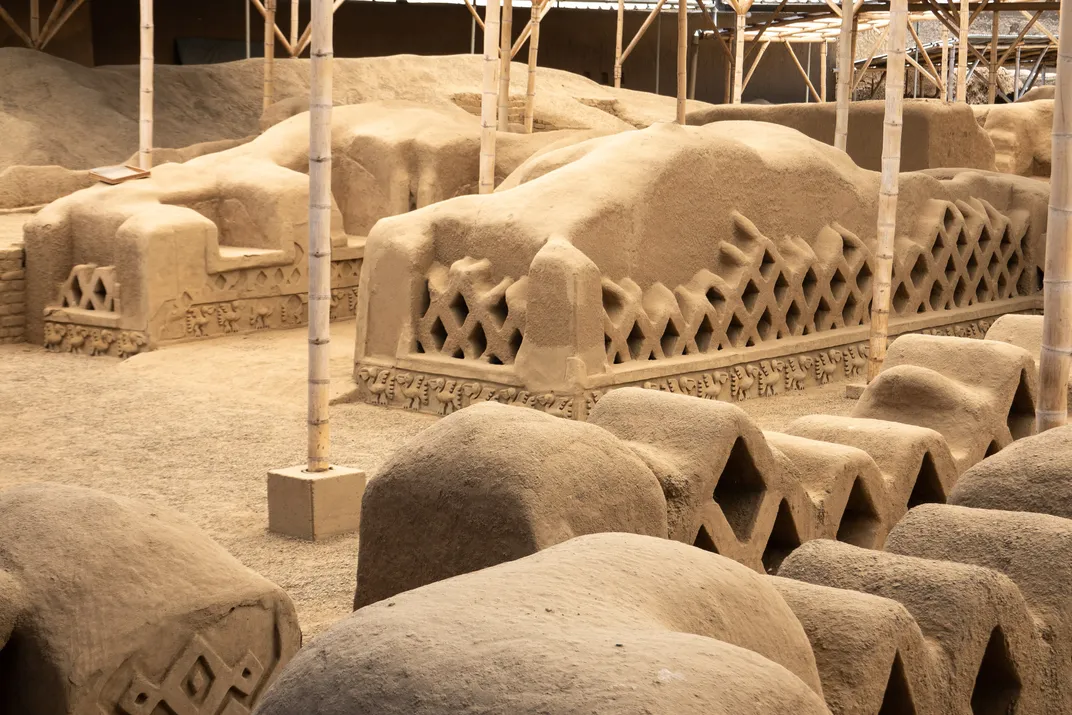
Until now, much of the available understanding of Chimú elite burials had been shaped by damaged or plundered platforms, as well as objects held in private collections and museums. Meneses has said that those sources did not provide the scientific record linking particular individuals, objects and their archaeological associations. The Chan Chan discovery offers evidence from a setting in which those links can be studied together. It may therefore serve as a benchmark against which material from less complete burial sites can be considered, without assuming that every elite grave followed precisely the same pattern.
That does not mean every question about the people interred there has already been answered. The report identifies at least 38 individuals, but it does not establish in these initial findings who each person was, how they were related, or why they were placed in the mausoleum. Nor does an unusually intact chamber eliminate the need for careful analysis of the remains and the goods before broader conclusions about Chimú society can be drawn. The attention surrounding the discovery should be matched by caution: preservation creates opportunity, not instant certainty.
Even with those limits, the find changes the scale of what can be investigated at a major archaeological site. Chan Chan was once the Chimú capital before Inca rule reached the area, and the tomb connects that political history to physical evidence of elite commemoration. The next stage will be to turn an extraordinary sealed discovery into a detailed account of the people, possessions and rituals represented inside it. How researchers document the associations among the remains and funerary goods will determine how far the site can reshape accounts of Chimú burial customs.
Source: Smithsonian Magazine
Related articles

Immerse Yourself in the Cosmos at Frank Lloyd Wright's Only Planetarium, Recently Restored to Its Former Glory in Florida
Completed in 1958, the domed building is located on the campus of Florida Southern College, home to 13 Wright-designed buildings, the world's largest single-site collection of the architect's work

Play Tractor online with friends — free
Real-time Sheng Ji / Tractor for 3–5 players, with complete bidding and trump rules across web, iOS and Android.
Play bidfive →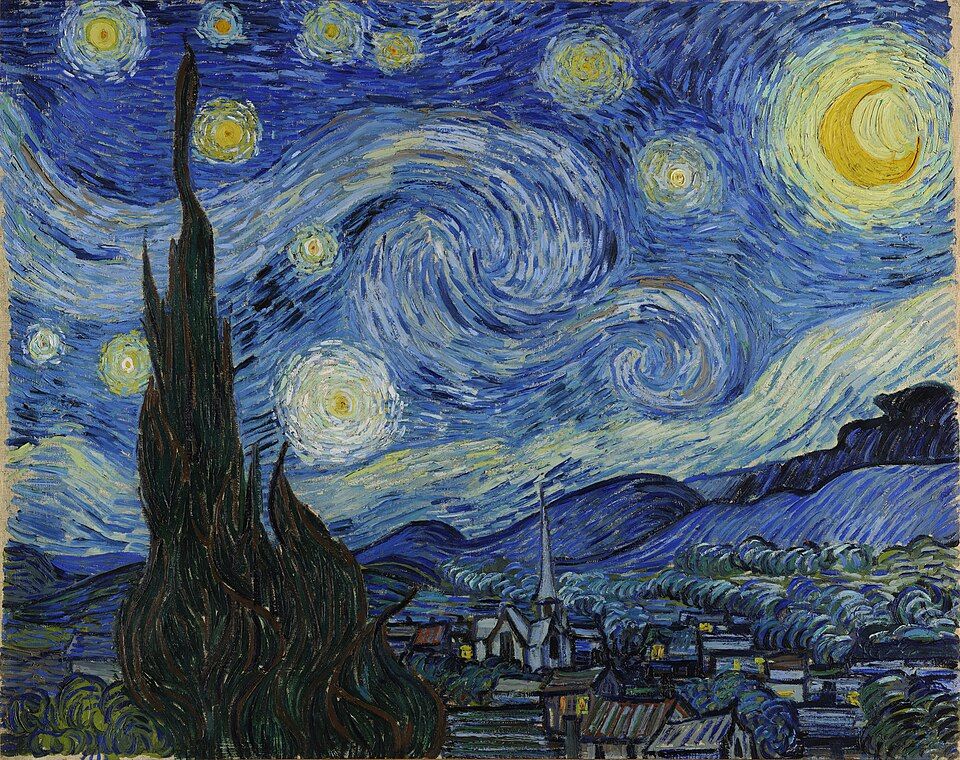
A Team of Astronomers Thinks They Have Identified the Exact Night Sky That Inspired Vincent van Gogh's 'Starry Night.' Not Everyone Is Convinced
Very few night skies seen from the south of France during the summer of 1889 would match the scene on van Gogh's canvas. A new study argues that it could have been July 22

'Pretty Boy' Floyd, One of the Most Notorious Outlaws of the Great Depression, Was Shot and Killed in an FBI Raid 92 Years Ago
Some Americans lauded the 30-year-old bank robber as a Robin Hood-esque folk hero. Others castigated him as a violent criminal whose misdeeds were emblematic of the troubled era

GTA 6 guides, updates and practical reference
Explore a Chinese GTA 6 guide library covering the release, map, characters, missions, vehicles and weapons.
Browse guides →
Create AI images with your own API key
aixipi runs on desktop/web, uses your own model API balance, and avoids subscription lock-in.
Try aixipi →