
U.S. military declares end of anti-ISIS Operation Inherent Resolve in Iraq
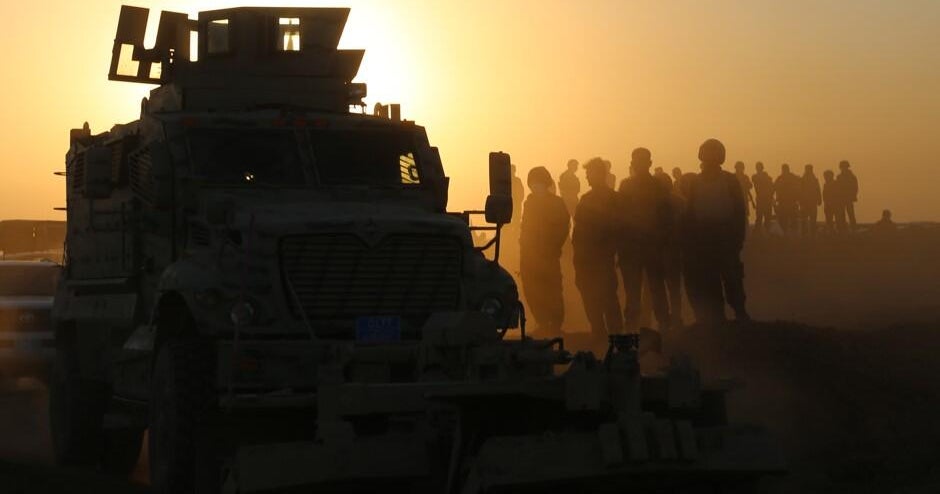
The Pentagon has declared the Iraq phase of Operation Inherent Resolve over, marking the formal end of a U.S.-led military campaign created to fight the Islamic State group. The announcement said American-led coalition personnel and military materiel had left an important installation in northern Iraq, completing a withdrawal arranged earlier with Baghdad. U.S. officials presented the step as evidence that ISIS has been defeated in Iraq.
The decision closes a chapter that began in 2014, when Washington started Operation Inherent Resolve as ISIS expanded across Iraq and Syria. The group had emerged from the remains of al-Qaeda in Iraq and, before the new campaign began, had captured broad areas on both sides of the Iraq-Syria border. The U.S.-led effort was established in response to that rapid territorial advance and the threat it posed to the region.
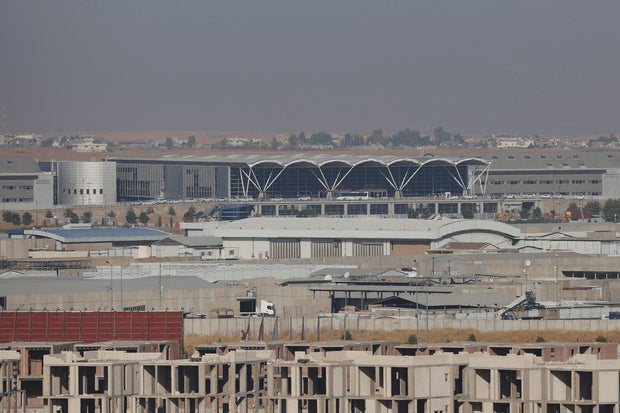
Wednesday’s declaration is more than a logistical update about one military site. It is the Pentagon’s official statement that the Iraq-based anti-ISIS operation has reached its endpoint. The departure of coalition forces and equipment from the northern base was carried out under an agreement previously reached with the Iraqi government, placing the withdrawal within a framework negotiated by Washington and Baghdad rather than describing it as an abrupt move.
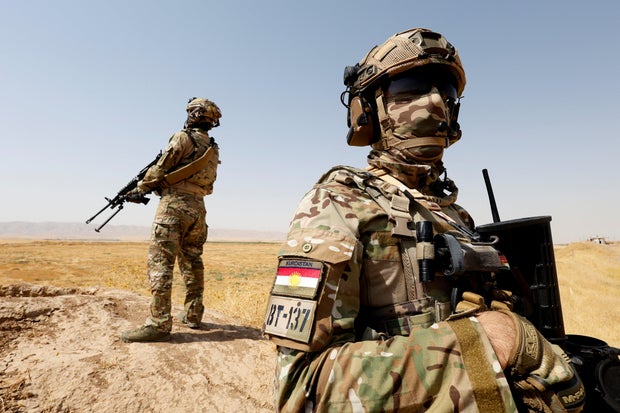
The announcement also highlights how sharply the American military footprint in Iraq has changed over time. Officials said in February that about 2,000 U.S. personnel were in the country. That was a much smaller presence than during the high point of the late-2000s troop increase, when the United States had more than 160,000 service members deployed in Iraq.
The comparison illustrates the difference between the scale of the two periods, even though both involved U.S. military operations in Iraq. The force level cited for February was only a fraction of the deployment reached during the earlier surge. In declaring the newer mission complete, the Pentagon is closing a campaign that operated with a far smaller American presence than the one seen during the most intensive period of the previous war.
Those eras were also shaped by different missions and circumstances. Operation Iraqi Freedom, the earlier U.S. campaign, was launched to remove Iraqi President Saddam Hussein and later became tied to managing a prolonged civil conflict. Operation Inherent Resolve came later, after ISIS rose from al-Qaeda in Iraq’s remnants and seized extensive territory in Iraq and neighboring Syria. The new declaration separates the conclusion of the anti-ISIS mission from that earlier, far larger U.S. intervention.
For Iraq, the end of the operation records a major shift in the relationship between the country and the coalition that had been operating there. The withdrawal from the northern base follows the prior arrangement with the Iraqi government, giving Iraqi authorities a central role in the process that brought the mission to a close. It also turns a military campaign that lasted from 2014 into a completed phase of U.S. policy in Iraq.
The Pentagon’s language is significant because it links the force withdrawal to its assessment that ISIS has been defeated. At the same time, the information released with the announcement focuses on the end of the Iraq-based operation and the removal of personnel and equipment from the designated northern facility. It does not, by itself, offer a wider account of every security question facing Iraq or Syria after the campaign’s conclusion.
Attention will now center on how the end of Operation Inherent Resolve is reflected in the next stage of U.S.-Iraq security relations. The available announcement establishes several key points: the mission began in 2014, coalition forces and equipment have departed the important northern base under the earlier agreement, and the Pentagon considers the anti-ISIS operation in Iraq finished. Its longer-term meaning will rest on developments after that formal closing declaration.
Source: CBS World
Related articles

Zelenskyy accuses Russia of using cluster warheads in deadly strikes
Russia launched the strikes on Ukraine less than a day after negotiations to end the war, which also involved the United States, ended in St. Petersburg.

Create AI images with your own API key
aixipi runs on desktop/web, uses your own model API balance, and avoids subscription lock-in.
Try aixipi →
At least 16 dead when powerful 7.0 magnitude earthquake strikes Tibet
It was the biggest earthquake in the region in the last five years, China

See how Big Tech is transforming Spain's landscape
A drought-stricken region of northeast Spain has become a focus for American companies searching for locations to place their data centers.