
U.S. military strikes Iran, while Trump vows more for Tehran's retaliation

The United States carried out a new round of military attacks inside Iran on Tuesday, prompting Tehran to answer with missiles and drones aimed at locations around the Middle East. President Donald Trump said further U.S. action could follow Iran’s retaliation, signaling that the renewed exchange may not end quickly.
The strikes restart open fighting after roughly a month without reported attacks between the two sides. The conflict has repeatedly surged and receded over more than six months, rather than following a straight line from escalation to settlement. Each lull has created the appearance of space for de-escalation, but Tuesday’s events showed that the underlying confrontation remained unresolved. Governments, civilians and commercial operators must reassess risk whenever the pause breaks down.

U.S. Central Command said Tuesday night that its latest operation had concluded. It described the targets as Iranian military infrastructure, including air-defense positions, radar equipment and assets connected to maritime operations. The statement did not provide a fuller account of the sites struck, a precise breakdown of the weapons used, or an assessment of damage. Its announcement nevertheless framed the action as a completed barrage rather than an ongoing single wave.
Iran’s response extended beyond its borders, according to the account of the day’s events. Tehran launched both missiles and unmanned aircraft toward several regional locations. The available information did not identify every destination, the scale of the launches or the results at each site, leaving important questions about the immediate military effect unresolved. It was also unclear whether all launches had been intercepted, reached their intended areas, or caused damage.
One American strike reportedly caused civilian casualties. Local officials said a house where a wedding was being held was hit, killing five people and injuring dozens more. There was no further public detail in the available account on the circumstances surrounding the strike, the condition of the wounded, or whether the U.S. military had addressed the allegation. The report illustrates how operations described as directed at military capabilities can carry grave consequences for people near or inside the area of attack.
The return to combat also puts renewed attention on waterways essential to international trade. An Aug. 5 image from the Strait of Hormuz, near Bandar Abbas, showed a small vessel moving among cargo ships and other commercial craft at anchor. The scene underscored the dense civilian maritime traffic in a passage that sits alongside Iran. It also offered a reminder that an exchange centered partly on military maritime assets is unfolding near busy shipping routes.
That maritime setting matters because the U.S. command listed Iranian naval-related assets among the objectives of its barrage. Yet the publicly available account does not say whether commercial shipping was directly affected Tuesday, whether traffic patterns changed, or whether any vessels were damaged. Those omissions are significant in a region where military activity and merchant movement can occur in close proximity. They leave open questions for ship operators and authorities monitoring the route.
Washington presents the operation as a strike on defined Iranian military systems. Tehran’s regional missile-and-drone response, however, points to a broader geographic dimension and raises concern that other sites could be drawn into the confrontation. The reports available so far do not establish how Iran selected its targets, what sites were struck by its response, or whether additional launches are planned. Both accounts describe actions, but neither provides a complete public picture of the day’s consequences.
The next phase will depend on decisions that have not been publicly detailed: whether the United States follows through on Trump’s warning, whether Iran conducts another round of retaliation, and whether the monthlong pause proves to have been only an interruption. For now, Central Command’s declaration that the barrage was complete refers to that operation, not necessarily to the wider cycle of hostilities. The central question is whether either side treats Tuesday as a limited exchange or the start of a further escalation.
Source: NPR World
Related articles
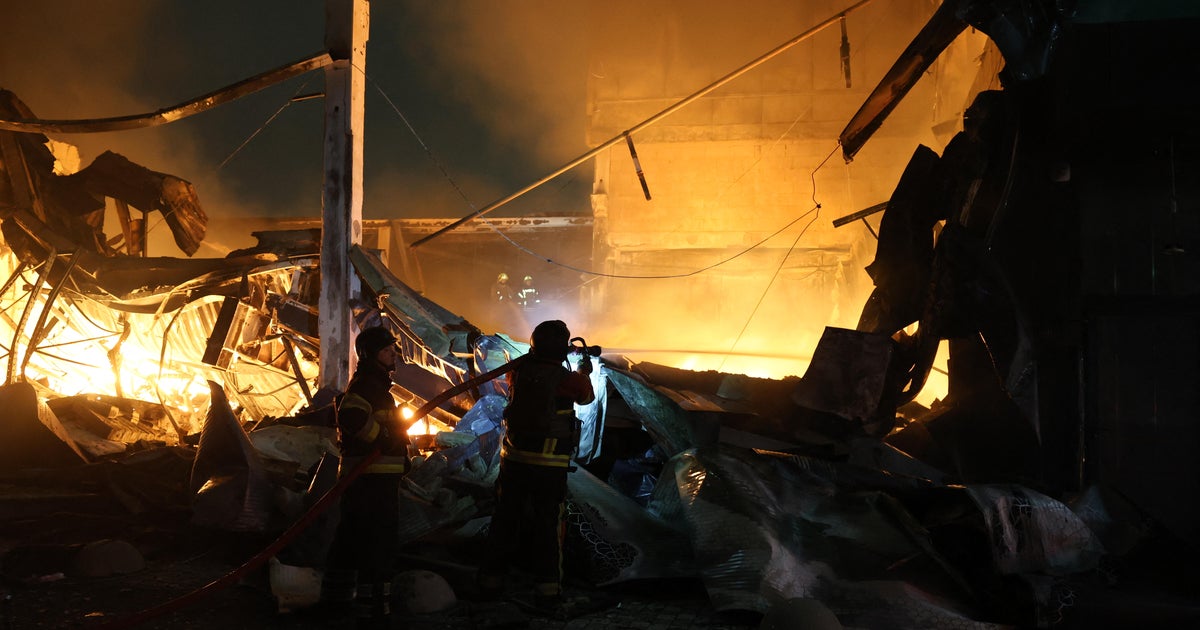
Zelenskyy accuses Russia of using cluster warheads in deadly strikes
Russia launched the strikes on Ukraine less than a day after negotiations to end the war, which also involved the United States, ended in St. Petersburg.

Create AI images with your own API key
aixipi runs on desktop/web, uses your own model API balance, and avoids subscription lock-in.
Try aixipi →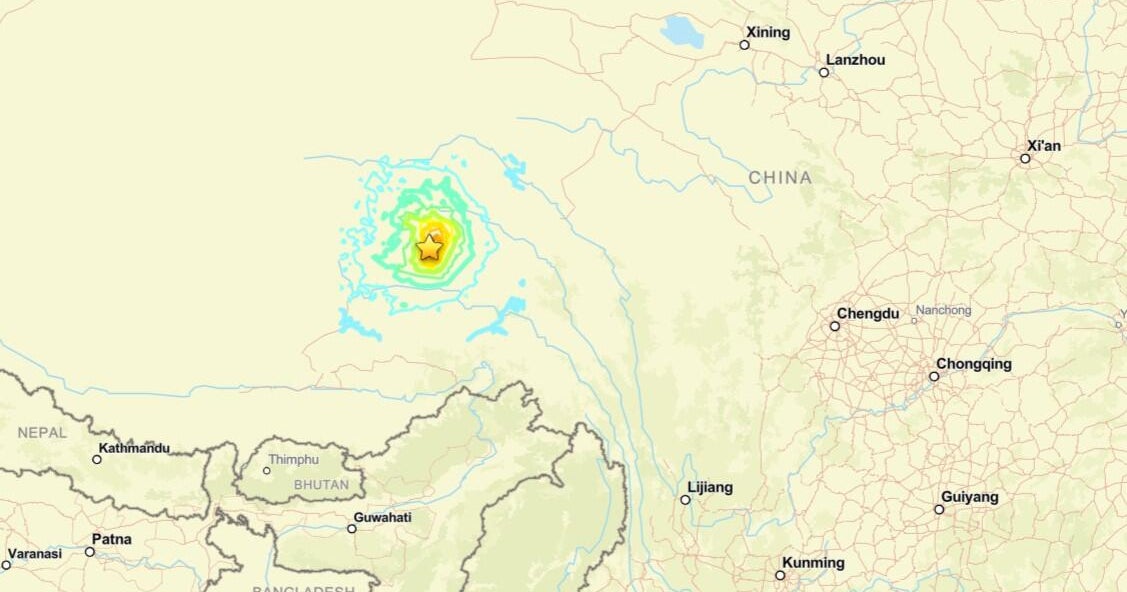
At least 16 dead when powerful 7.0 magnitude earthquake strikes Tibet
It was the biggest earthquake in the region in the last five years, China

See how Big Tech is transforming Spain's landscape
A drought-stricken region of northeast Spain has become a focus for American companies searching for locations to place their data centers.