
Watch Five Adorable Newborn Cheetah Cubs Grow on a Livestream From the Smithsonian's Conservation Biology Institute
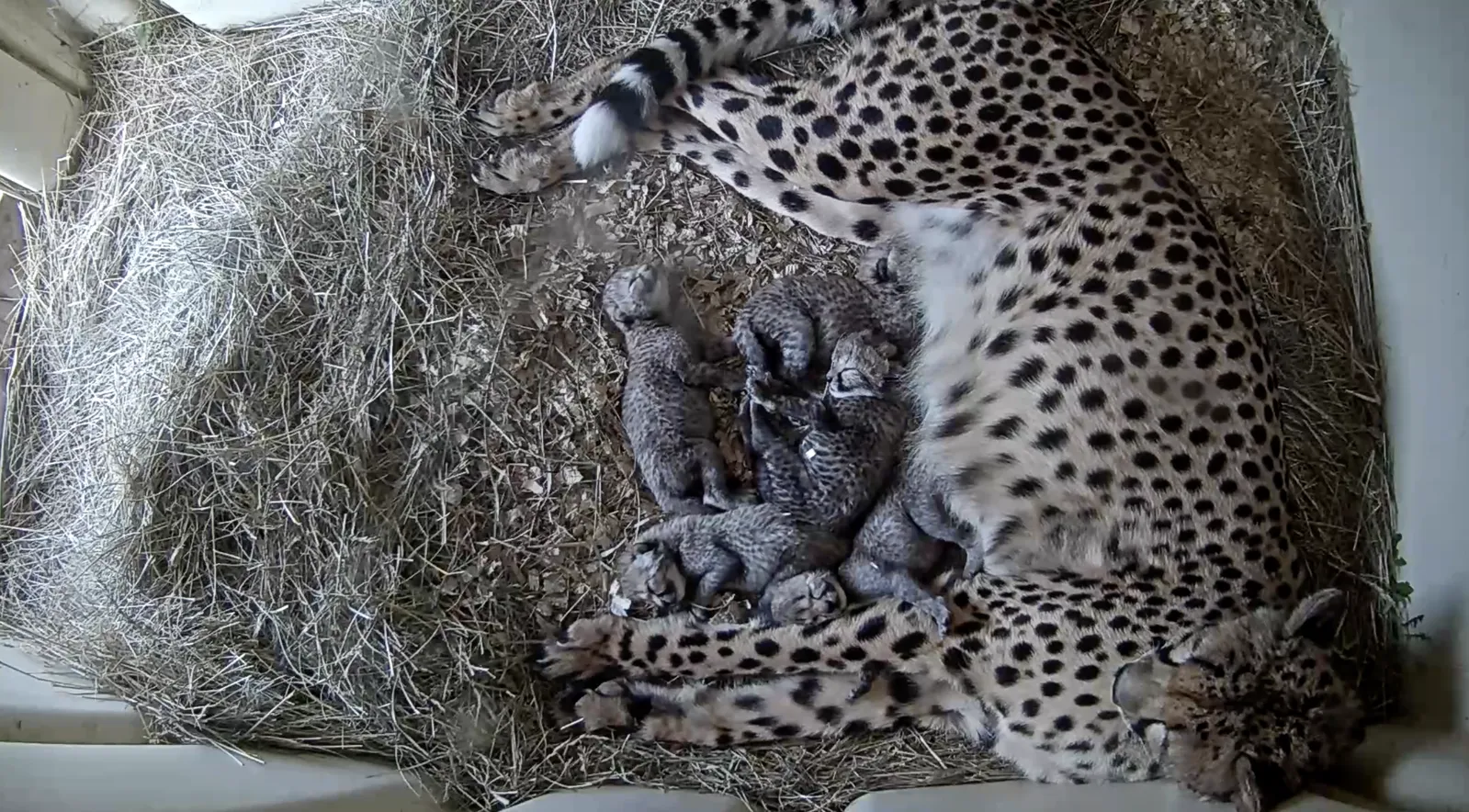
Five cheetah cubs born at the Smithsonian Conservation Biology Institute are now the focus of a public livestream, offering viewers an unusually close look at the first days of a new litter. The cubs arrived on October 5 at the institute’s Front Royal, Virginia, campus, where they remain in a den with their mother, Zura. The online feed follows the family as the newborns sleep, feed and begin to move around their shared space.
The litter represents a notable event for the institute’s cheetah-conservation work: there are five cubs, all described as healthy and energetic. Their early behavior has already been striking. Institute staff said the youngsters began scrambling over Zura on their first day, an early sign of the constant physical activity that has accompanied their quieter periods of rest.
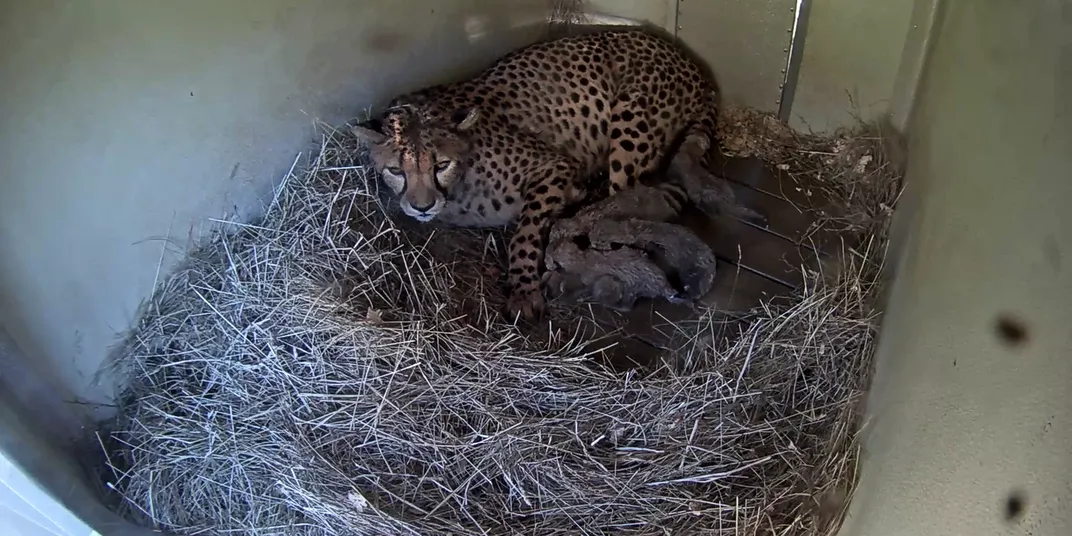
Zura is caring for her first litter, making the cubs’ routine especially dependent on their mother’s attention. With five newborns in the den, the work is continuous. One may be feeding while another needs cleaning or close contact, leaving little downtime in a group whose needs do not follow a single schedule. The livestream captures the collective nature of that care rather than presenting the animals as separate attractions.
Images from the feed on October 9 showed Zura settled with the cubs as they clustered together. The young cats were seen piled in a small spotted mass, with one stretching its limbs and another negotiating a path across its littermates to reach its mother. Such moments are modest, but they show the rhythm of a den in which resting, nursing and repositioning are closely interwoven.
The camera also changes how the birth can be followed. Instead of relying only on occasional institutional updates, the public can watch a developing family in real time from outside the enclosure. That access makes the story less about a single birth announcement and more about a sequence of early milestones: feeding, sleeping, climbing and the growing coordination of five animals sharing one confined space.
For the conservation institute, the arrival is both a public-facing event and a reminder that the earliest days require sustained observation. A large litter can make the activity on screen seem playful, yet the same number of cubs means repeated demands on a first-time mother. Viewers may see bursts of movement or an apparently quiet den, but the care behind those scenes remains essential to the cubs’ daily routine.
Although the stream makes the den readily visible, it offers only a partial view of the work surrounding the litter. The clearest facts are the cubs’ health, activity and proximity to Zura; the broadcast does not replace the day-to-day assessment needed for animals at such an early stage.
The livestream is therefore best understood as a window into the beginning of the process, not a guarantee about what follows. The footage can show whether the cubs are active and close to their mother, but it cannot answer every question about their future from a few brief scenes. Their next visible changes are likely to come gradually, as the animals spend more time exploring and their interactions with Zura continue to evolve.
That uncertainty is part of what makes the feed useful as well as appealing. It presents newborn cheetahs not as a finished conservation success, but as animals in an early stage that still depends on maternal care and attentive oversight. The institute’s milestone lies in the birth of the litter and its healthy start; the livestream lets the public follow the ordinary, repeated work that gives that start meaning.
For now, the five cubs remain close together in their Virginia den, creating a changing scene of naps, nursing and short bursts of movement around Zura. The feed gives watchers a chance to observe those small developments as they occur, while the conservation team continues to monitor a first-time mother and a litter large enough to keep every moment busy.
Source: Smithsonian Magazine
Related articles

Immerse Yourself in the Cosmos at Frank Lloyd Wright's Only Planetarium, Recently Restored to Its Former Glory in Florida
Completed in 1958, the domed building is located on the campus of Florida Southern College, home to 13 Wright-designed buildings, the world's largest single-site collection of the architect's work

Play Tractor online with friends — free
Real-time Sheng Ji / Tractor for 3–5 players, with complete bidding and trump rules across web, iOS and Android.
Play bidfive →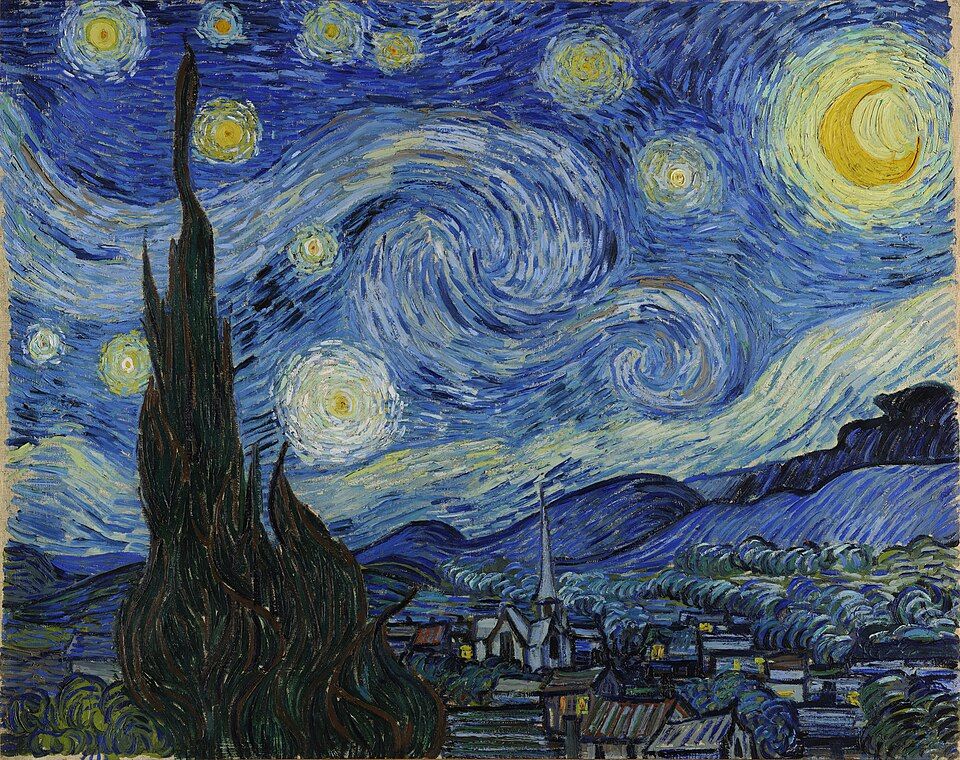
A Team of Astronomers Thinks They Have Identified the Exact Night Sky That Inspired Vincent van Gogh's 'Starry Night.' Not Everyone Is Convinced
Very few night skies seen from the south of France during the summer of 1889 would match the scene on van Gogh's canvas. A new study argues that it could have been July 22

'Pretty Boy' Floyd, One of the Most Notorious Outlaws of the Great Depression, Was Shot and Killed in an FBI Raid 92 Years Ago
Some Americans lauded the 30-year-old bank robber as a Robin Hood-esque folk hero. Others castigated him as a violent criminal whose misdeeds were emblematic of the troubled era

GTA 6 guides, updates and practical reference
Explore a Chinese GTA 6 guide library covering the release, map, characters, missions, vehicles and weapons.
Browse guides →
Create AI images with your own API key
aixipi runs on desktop/web, uses your own model API balance, and avoids subscription lock-in.
Try aixipi →