
When a 19th-Century Scottish Landowner Blocked a Public Footpath, Locals Rebelled. Now, Archaeologists Have Unearthed Parts of His Controversial Wall
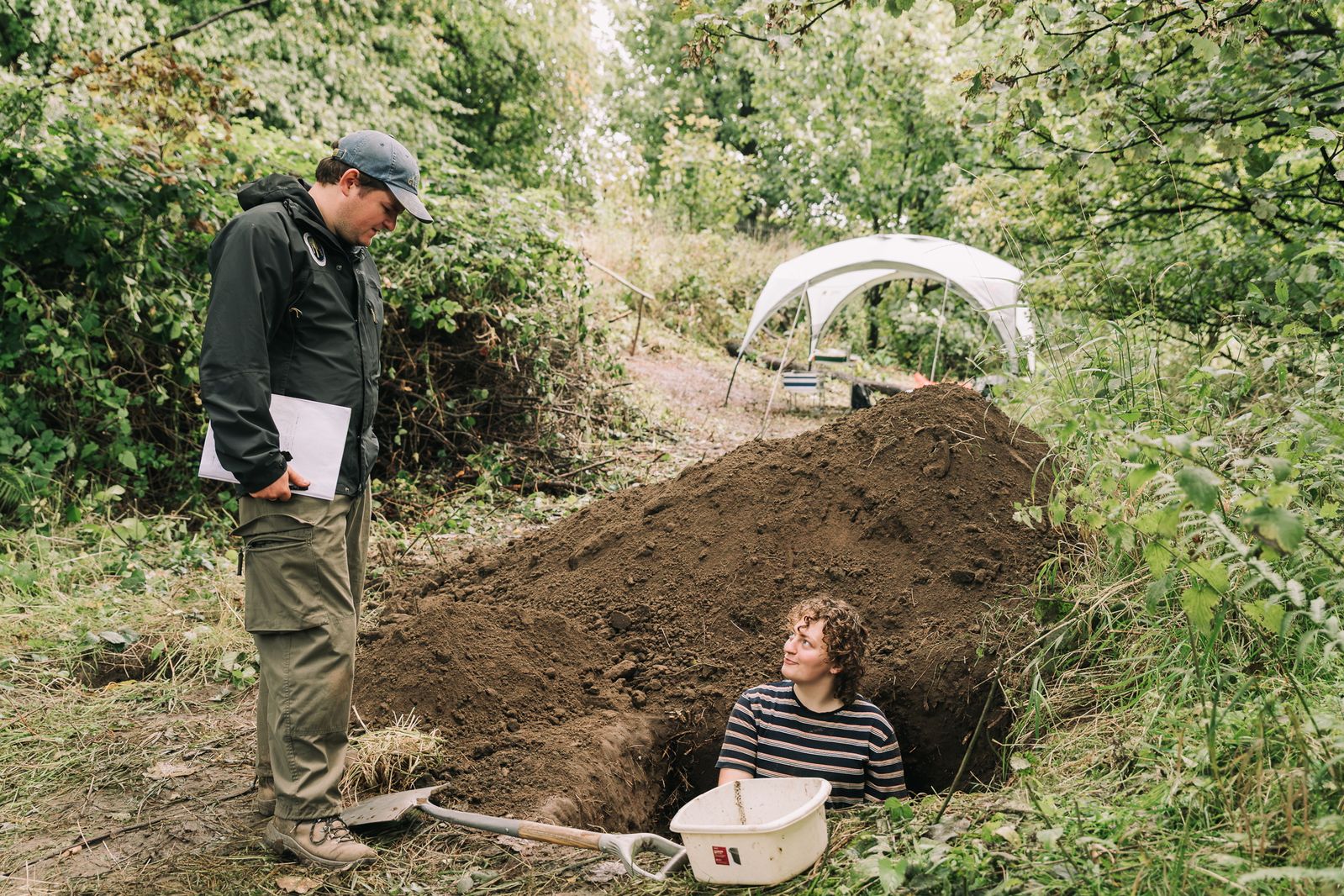
Archaeologists working with volunteers near Glasgow have uncovered sections of a long-disputed stone barrier whose story reaches back to a confrontation over access, ownership and the River Clyde. The excavation has brought new attention to Harvie’s Dyke, the name given to walls that became the focus of a violent local protest in 1823. The find places physical remains at the center of a dispute that was once fought in streets, courts and public opinion.
The structure stood on land acquired in the early nineteenth century by Thomas Harvie, a wealthy Scottish distiller. His estate lay in countryside east of Glasgow, where a route used by the public followed the Clyde and crossed his property. Harvie objected to that passage and moved to close it off, turning an ordinary riverside walk into a test of who could control a familiar shared route.
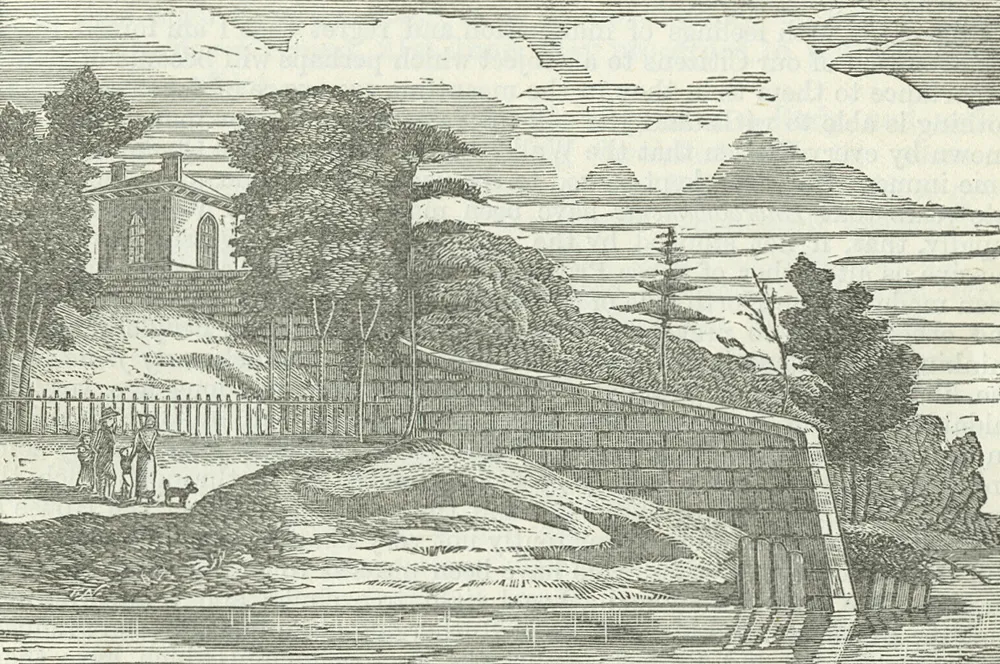
His answer was not a modest fence. Harvie commissioned two substantial stone walls, each about 12 feet high, placed to seal the path at the edges of the estate. In Scotland, a stone wall can be called a dyke, and the barriers soon carried his name. Their height and reinforced construction suggested that the restriction was intended to last, rather than represent a temporary disagreement between an owner and his neighbors.
The closure provoked anger in Glasgow, particularly among people for whom the route was part of everyday movement along the river. Archaeologist Edward Stewart of Archaeology Scotland has described the city’s reaction as one of intense opposition. The dispute was therefore about more than masonry: it exposed a collision between an individual landholder’s claim to his property and a community’s expectation that it could continue using a route beside the Clyde.
That tension escalated in 1823. Residents from Glasgow’s East End assembled and went to the dyke, where they demolished the walls. Coal miners supplied gunpowder and other blasting materials, allowing the crowd to break through a structure built to resist ordinary removal. The destruction was a violent episode, but it also showed the depth of resistance to a decision that many locals regarded as cutting them off from the river.
The confrontation was not limited to that single day. Opposition to the barriers also involved disorder, organized economic pressure and legal challenges. Rioting, boycotts and lawsuits formed different parts of a broader campaign to restore access to the riverside route. Together, those efforts produced a victory for Glasgow’s working people and middle-class supporters, who succeeded in reclaiming use of the path despite the estate owner’s attempt to exclude them.
The newly exposed remains add archaeological evidence to a conflict known largely for its social and legal significance. Rather than treating the dyke only as a symbol from historical accounts, researchers can now examine portions of the actual construction. Archaeologists and community volunteers took part in the work near Glasgow, linking a modern field investigation with a dispute that involved residents from the surrounding city two centuries earlier.
The discovery also preserves the complexity of the episode. Harvie was acting as the owner of an estate he had purchased, while the people opposing him asserted a public interest in a route beside the river. The surviving stones do not settle every question raised by that clash, but they make clear how a disagreement over a path became a larger contest over private control, public access and collective action.
Further study of the uncovered sections may help clarify how the barriers were arranged and built, and how much of Harvie’s Dyke survives beneath the landscape. For now, the excavation offers a tangible reminder that access rights can be shaped not only by formal ownership, but also by public protest and legal argument. What began as an effort to close a footpath ultimately left behind both a historic victory and a contested archaeological site.
Source: Smithsonian Magazine
Related articles
Immerse Yourself in the Cosmos at Frank Lloyd Wright's Only Planetarium, Recently Restored to Its Former Glory in Florida
Completed in 1958, the domed building is located on the campus of Florida Southern College, home to 13 Wright-designed buildings, the world's largest single-site collection of the architect's work

Play Tractor online with friends — free
Real-time Sheng Ji / Tractor for 3–5 players, with complete bidding and trump rules across web, iOS and Android.
Play bidfive →
A Team of Astronomers Thinks They Have Identified the Exact Night Sky That Inspired Vincent van Gogh's 'Starry Night.' Not Everyone Is Convinced
Very few night skies seen from the south of France during the summer of 1889 would match the scene on van Gogh's canvas. A new study argues that it could have been July 22

'Pretty Boy' Floyd, One of the Most Notorious Outlaws of the Great Depression, Was Shot and Killed in an FBI Raid 92 Years Ago
Some Americans lauded the 30-year-old bank robber as a Robin Hood-esque folk hero. Others castigated him as a violent criminal whose misdeeds were emblematic of the troubled era

GTA 6 guides, updates and practical reference
Explore a Chinese GTA 6 guide library covering the release, map, characters, missions, vehicles and weapons.
Browse guides →
Create AI images with your own API key
aixipi runs on desktop/web, uses your own model API balance, and avoids subscription lock-in.
Try aixipi →