
Where Exactly Were the First Humans to Be Captured in a Photograph Standing? Three Obsessed Filmmakers Solved the Nearly 200-Year-Old Mystery
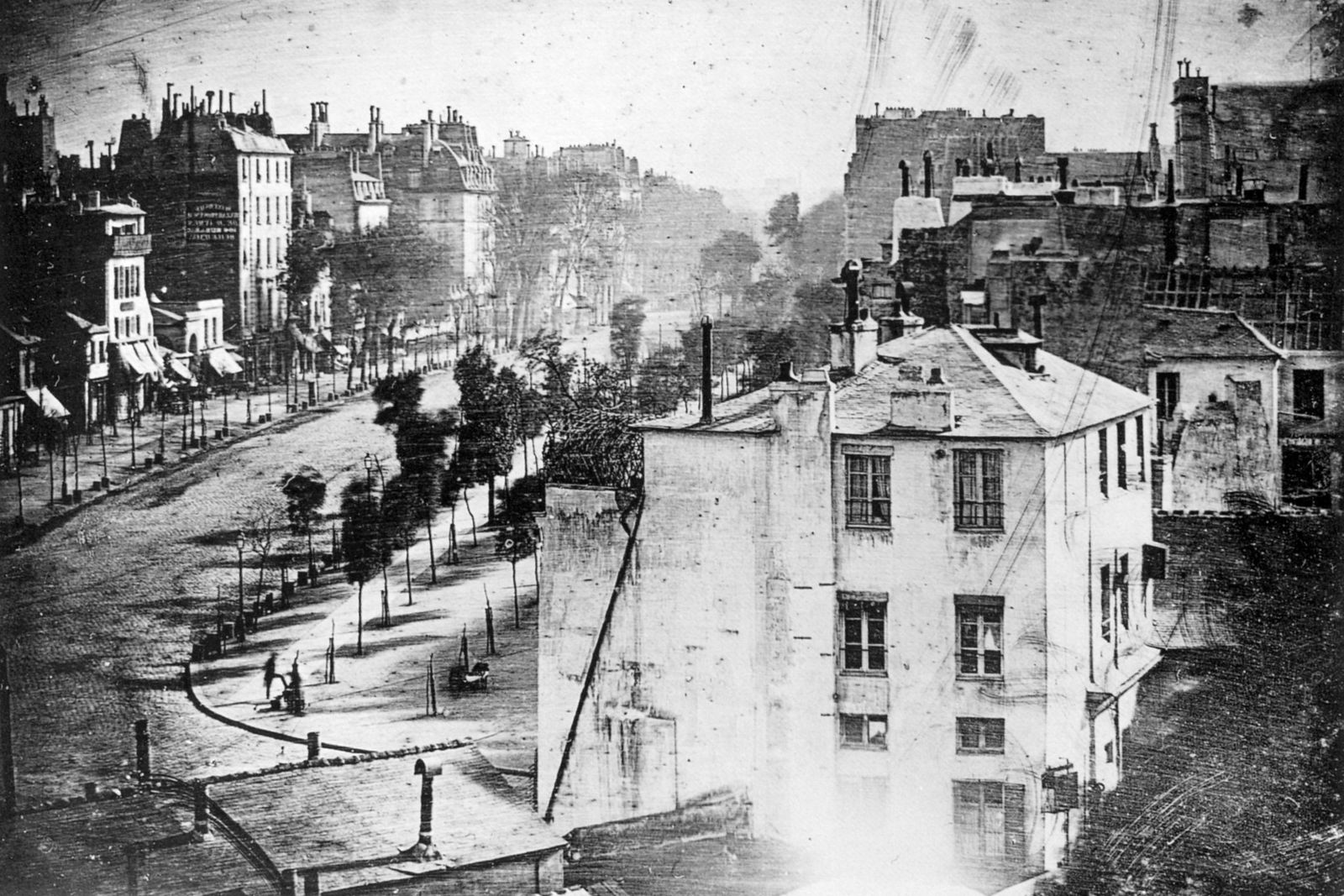
A nearly two-century-old question about one of photography’s foundational images has received a new answer in Paris. Three filmmakers who pursued the case through historical records and digital reconstruction have identified the spot associated with the earliest known photograph to show people standing still. The finding returns a precise setting to an image that has long been celebrated for its quiet human presence: a customer paused at a shoe-shining stand while the city moved around him.
The image dates to a spring day in 1838, when Louis Daguerre pointed his camera toward the Boulevard du Temple from a nearby studio. The scene appears remarkably empty despite the boulevard’s reputation as a busy Paris route. A man receiving a shine and the person attending to his footwear remained in place long enough to register, making them widely regarded as the first human figures recorded by a camera.
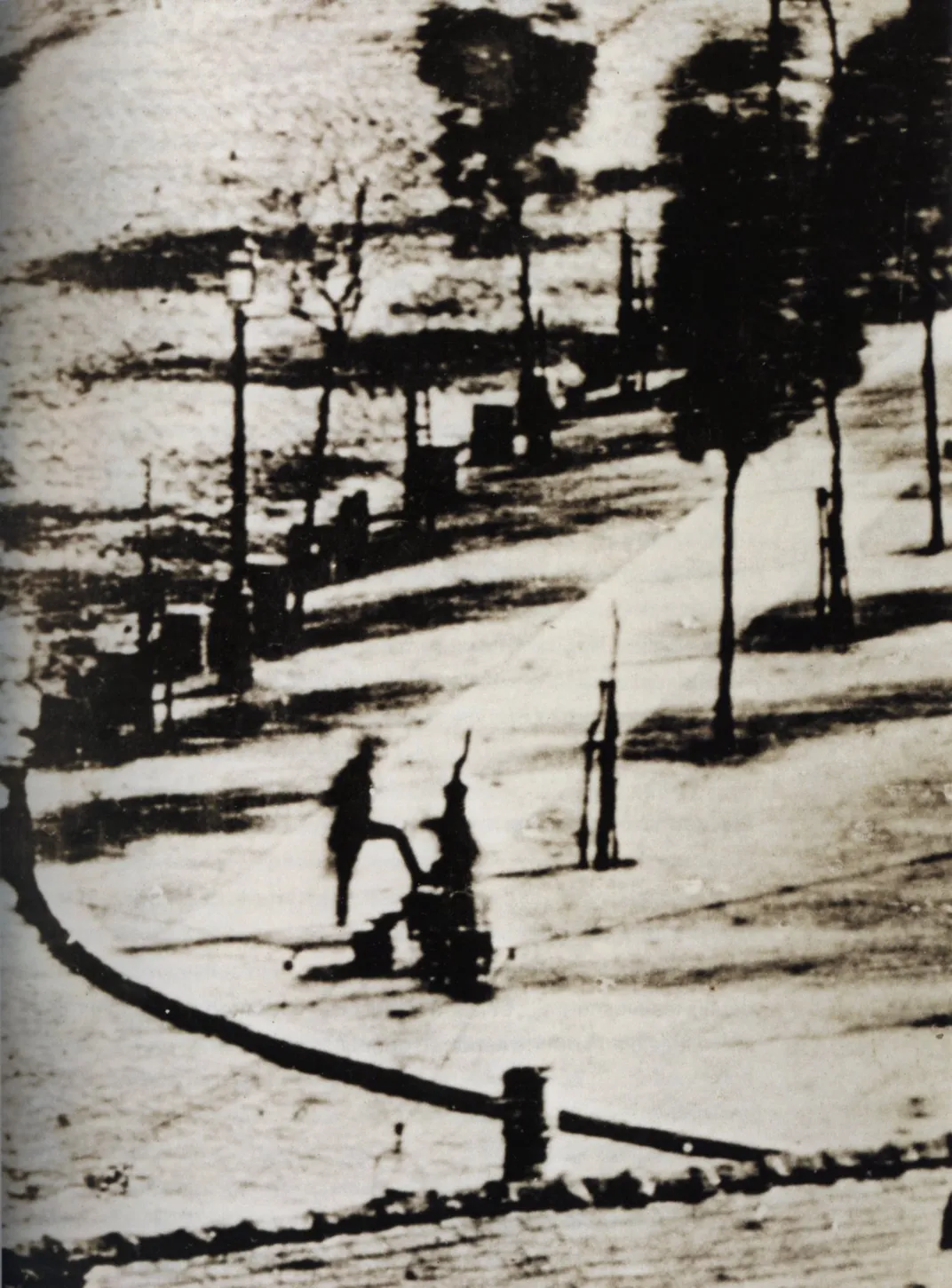
That apparent emptiness was a technical consequence rather than a portrait of an abandoned street. Daguerre’s early photographic apparatus required an exposure that could last as long as ten minutes. Pedestrians, vehicles and other activity passed too quickly to leave clear traces. The two people in the moment did not set out to become photographic subjects; their ordinary task gave them the stillness the process demanded.
Daguerre was already known across several creative and technical fields, working as a painter and printmaker as well as an inventor. His name became attached to the daguerreotype, the photographic method central to this early period. From his studio vantage point, he made an image whose importance now reaches beyond the invention itself: it preserves a fleeting encounter between anonymous people at the edge of a changing city.
Locating that encounter later became difficult because the Paris seen in the picture did not remain intact. The Boulevard du Temple was cut back during the development of what is now Place de la République. Once the street layout changed, the position of the shoe-shine stand could no longer be easily matched to the contemporary city, leaving a familiar image without a settled ground-level reference point.
The investigation began in 2024, when the filmmakers took up the problem. Over roughly two years, they examined archival material and constructed three-dimensional versions of nineteenth-century Paris to compare the old view with the reshaped neighborhood. Their work linked the photograph to a specific location that had slipped from public understanding as the boulevard disappeared in its earlier form.
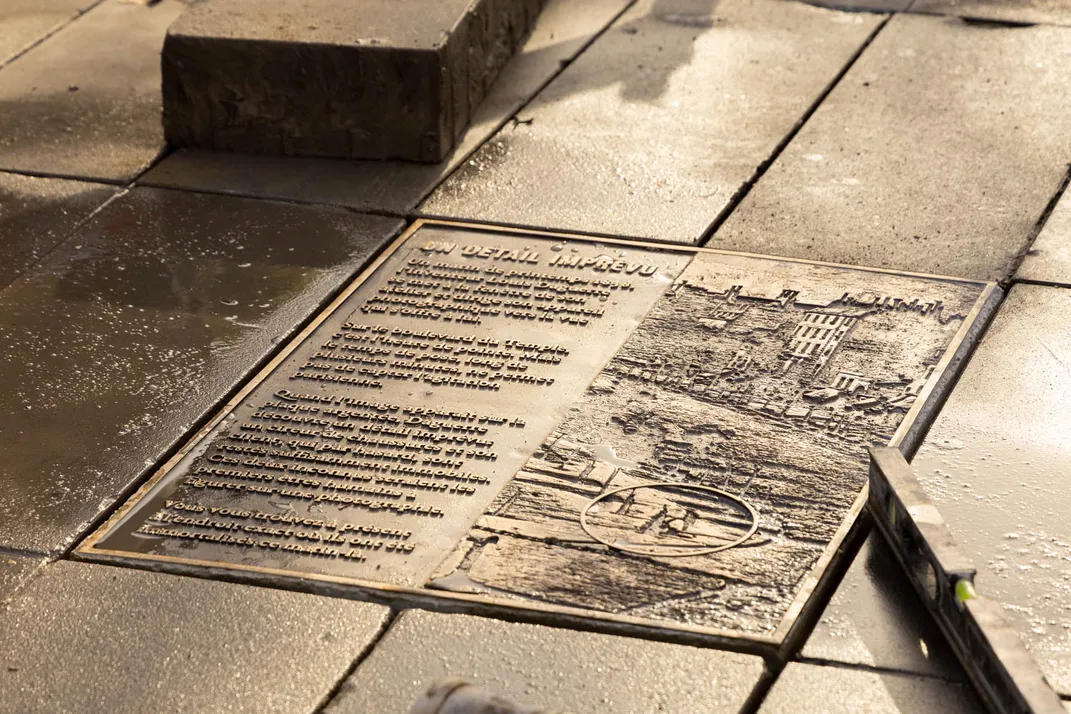
The result has been marked in the city itself. A bronze plaque now identifies the location and recognizes the historic photograph, giving passersby a way to connect a modern urban setting with the long-exposure experiment made there. The marker also acknowledges the image’s poetic quality, an unusual description for a technical milestone whose most memorable feature is the accidental visibility of two people.
The conclusion does not remove every limitation of the photograph. The figures have not been identified by name, and the image offers only a brief visual record of their work. Its broader meaning also rests on the conditions of early photography: the camera selected those who stayed put, while nearly everyone else vanished from the plate. Still, the recovered site adds physical context to a work often discussed mainly as a landmark in photographic history.
The new identification shifts attention from the image’s famous figures to the built environment that made the view possible. It shows how archival research and digital modeling can reopen questions created by urban redevelopment, while the new plaque makes the answer visible outside museums and books. For viewers, the episode gives a more concrete place to consider an 1838 street scene in which a routine shoe shine unexpectedly became part of photography’s origin story.
Source: Smithsonian Magazine
Related articles
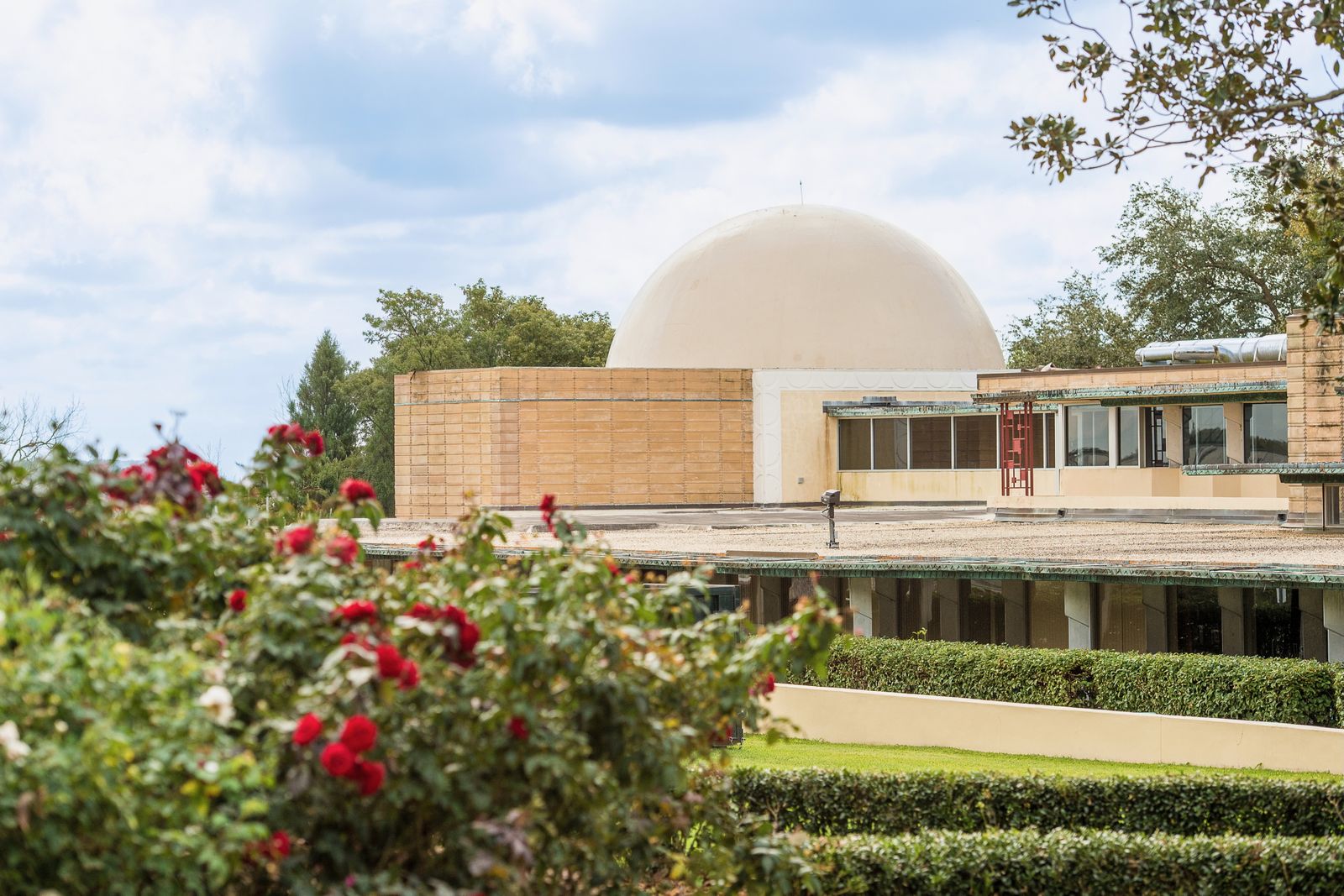
Immerse Yourself in the Cosmos at Frank Lloyd Wright's Only Planetarium, Recently Restored to Its Former Glory in Florida
Completed in 1958, the domed building is located on the campus of Florida Southern College, home to 13 Wright-designed buildings, the world's largest single-site collection of the architect's work

Play Tractor online with friends — free
Real-time Sheng Ji / Tractor for 3–5 players, with complete bidding and trump rules across web, iOS and Android.
Play bidfive →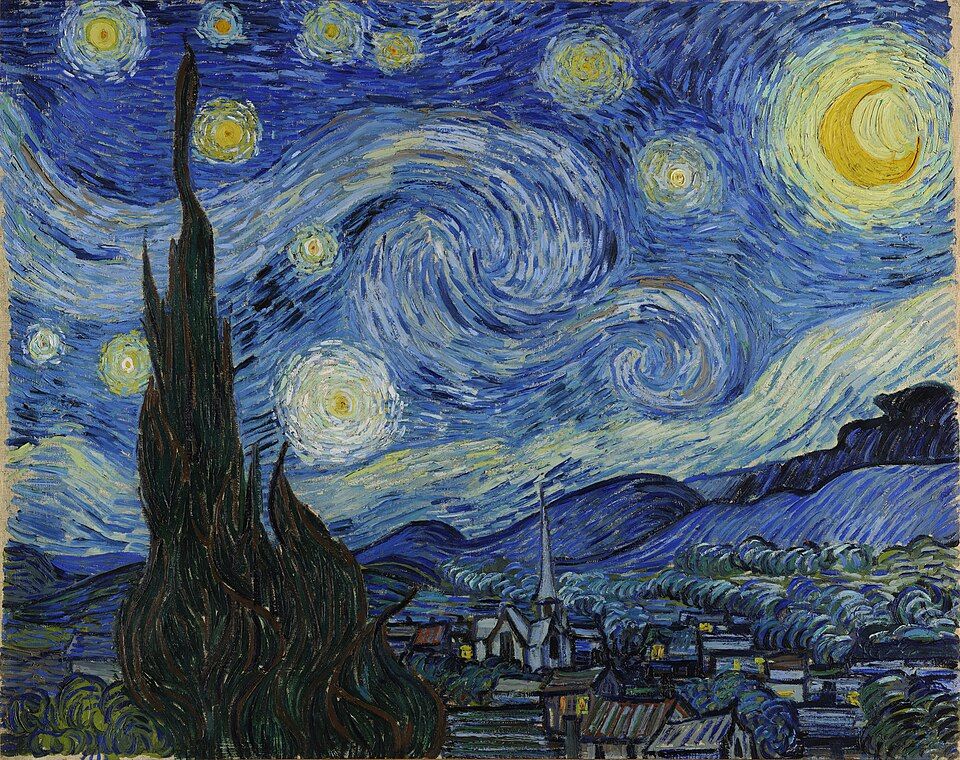
A Team of Astronomers Thinks They Have Identified the Exact Night Sky That Inspired Vincent van Gogh's 'Starry Night.' Not Everyone Is Convinced
Very few night skies seen from the south of France during the summer of 1889 would match the scene on van Gogh's canvas. A new study argues that it could have been July 22

'Pretty Boy' Floyd, One of the Most Notorious Outlaws of the Great Depression, Was Shot and Killed in an FBI Raid 92 Years Ago
Some Americans lauded the 30-year-old bank robber as a Robin Hood-esque folk hero. Others castigated him as a violent criminal whose misdeeds were emblematic of the troubled era

GTA 6 guides, updates and practical reference
Explore a Chinese GTA 6 guide library covering the release, map, characters, missions, vehicles and weapons.
Browse guides →
Create AI images with your own API key
aixipi runs on desktop/web, uses your own model API balance, and avoids subscription lock-in.
Try aixipi →