
Why can't Saudi Arabia stop the Houthis' deadly attacks?

Saudi Arabia’s effort to protect itself from Houthi attacks is under renewed strain after strikes on energy facilities and civilian airports caused at least 20 deaths in recent weeks. The attacks have highlighted the difficulty of defending a vast, infrastructure-heavy country against a smaller force based in neighboring Yemen. Experts cited by CBS News say the problem is shaped by geography, pressure on interceptor supplies and Houthi tactics that continue to evolve.
The Iranian-backed Houthi movement has selected targets with consequences extending well beyond the immediate conflict. Its attacks have reached the headquarters of Saudi Aramco, identified in the report as the world’s largest oil company. Energy-related infrastructure has also been struck, while civilian airports have faced attack. Together, those incidents have intensified concerns about both public safety and the security of the kingdom’s most important economic assets.
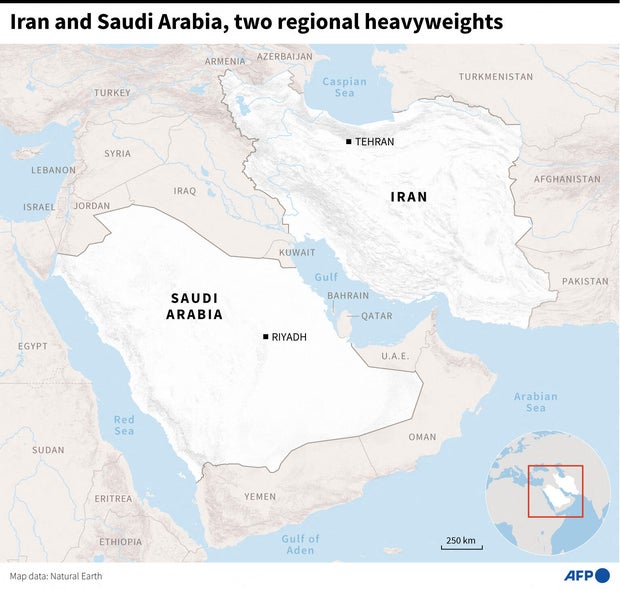
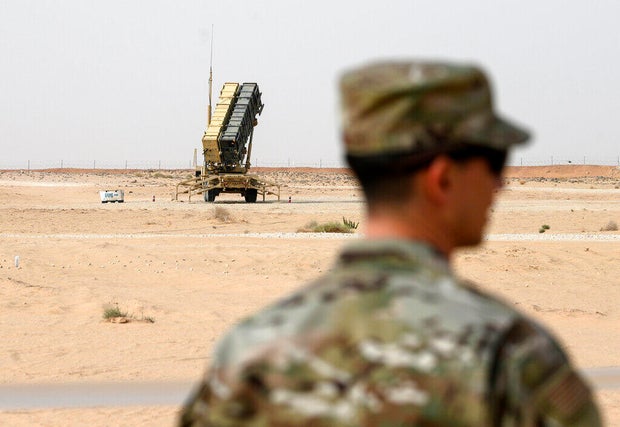
Saudi officials frequently report that air defenses have intercepted Houthi ballistic missiles and drones. On Wednesday, the government said it had destroyed five incoming threats. Such announcements show that defensive systems are operating, but they also underline the repeated demands placed on them. Defenders must detect and engage attacks again and again, while the Houthis can alter how they deploy missiles and drones. Saudi Arabia’s limited public disclosures make it difficult to assess the broader picture.
Physical geography is one of the central challenges identified by analysts. The kingdom has a large area to defend and critical facilities spread across it, creating many potential points of exposure. An attacker does not need to overwhelm every layer of protection to have an impact; finding one vulnerable target or route may be enough. That helps explain why a wealthy state with a substantial military can still appear to be responding defensively to a less conventional opponent.
Interceptor availability adds another layer of pressure. Air-defense networks require more than radar coverage and launch equipment; they also depend on a continuing supply of missiles capable of stopping incoming weapons. When attacks are frequent, the number and cost of interceptors can become a strategic issue. The report does not indicate that Saudi Arabia lacks defensive capability, but it does point to the difficulty of maintaining sustained protection against an adversary that can keep changing its approach.
The fighting is also tied to Yemen’s Red Sea coast, where Houthi forces are contesting control with Saudi-backed government troops. That stretch of coastline lies beside a waterway important to international energy shipments, giving the local conflict wider significance. Risks to oil and gas supplies have contributed to higher prices, according to the report, as markets also contend with confrontation between Iran and the United States near the Strait of Hormuz.
For Saudi Arabia, the immediate task is not simply to destroy individual missiles or drones, but to reduce the ability of future attacks to cause economic and political disruption. The kingdom has extensive financial and military resources, yet those advantages do not automatically resolve a problem involving airports, oil sites and other high-value facilities across a large territory. The Houthis have demonstrated that even attacks that are often intercepted can still impose pressure on a defender.
There is, however, an important limit on outside assessments. Saudi statements focus on successful interceptions, while the attacks that reach their targets reveal the limits of any defensive system. With little public information about attempted strikes, damage evaluations or defensive inventories, it remains unclear whether the balance is shifting. The next phase will depend on whether Houthi operations continue at the same pace, whether Saudi defenses can sustain coverage, and whether developments in Yemen or near Hormuz further unsettle energy markets.
Source: CBS World
Related articles
Zelenskyy accuses Russia of using cluster warheads in deadly strikes
Russia launched the strikes on Ukraine less than a day after negotiations to end the war, which also involved the United States, ended in St. Petersburg.

Create AI images with your own API key
aixipi runs on desktop/web, uses your own model API balance, and avoids subscription lock-in.
Try aixipi →
At least 16 dead when powerful 7.0 magnitude earthquake strikes Tibet
It was the biggest earthquake in the region in the last five years, China

See how Big Tech is transforming Spain's landscape
A drought-stricken region of northeast Spain has become a focus for American companies searching for locations to place their data centers.