
Wildfires Drive Mass Evacuations Across France and Spain
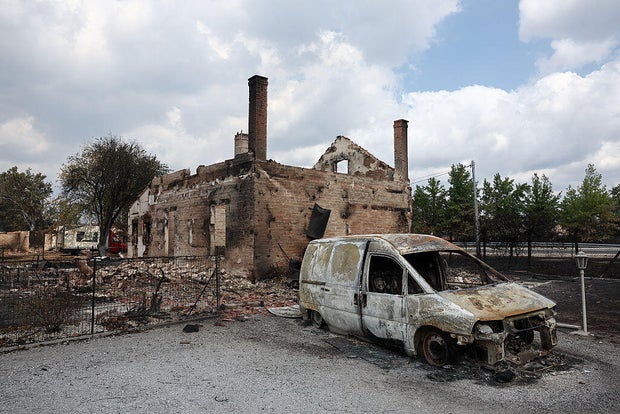
Wildfires burning across France and Spain have forced the evacuation of more than 300,000 people, turning a summer of repeated heat and drought into a large-scale emergency on both sides of the border. Fire crews remained deployed as authorities tried to contain active blazes, protect communities in their path and move residents away from rapidly changing danger zones. The scale of the evacuations underlines how quickly a fire crisis can expand when dry land, high temperatures and shifting winds combine.
In France, the Gironde region around Bordeaux has become one of the most closely watched areas. Officials issued overnight evacuation orders for five additional localities as conditions changed and the fire threat remained difficult to predict. Authorities said that more than 250,000 people had been told to leave the danger area in that region alone, making the operation one of the country’s largest civilian evacuations in decades.
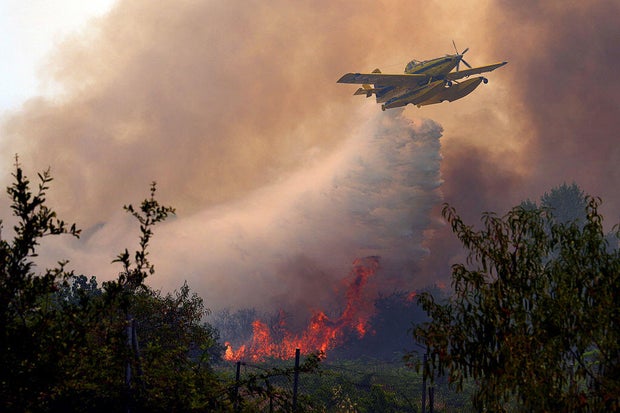
The immediate challenge is not simply the size of a fire front. Winds can redirect flames and embers, while very dry vegetation allows new hot spots to emerge beyond the area crews have already worked to secure. That makes every evacuation decision a balance between acting early enough to protect people and keeping routes, shelters and emergency services able to cope with a fast-moving situation.
France’s interior minister, Laurent Nunez, said conditions for fires across the country remained highly unfavorable. The warning reflects the broader weather pattern behind the crisis: forests and other vegetation in parts of France and Spain have been dried out by successive heatwaves since May. Long periods without enough moisture leave landscapes more vulnerable, and a single ignition can become far more difficult to control once wind and heat take hold.
Spain is facing the same regional pressure. The cross-border nature of the emergency does not mean every fire is the same, but it does show how a prolonged dry spell can strain several areas at once. Firefighters, local authorities and residents have to make decisions with limited certainty, because weather conditions can alter the behavior of a blaze within hours. The priority remains protecting lives before assessing the full damage to homes, land and local economies.
For people ordered to leave, the disruption reaches well beyond the moment of evacuation. Families may have little time to collect essential belongings, while communities must find safe accommodation and keep vulnerable residents connected to care. Large evacuations also place pressure on roads and communications, especially when many nearby towns are responding at the same time. Officials will need to keep updates clear and frequent as residents wait for confirmation that it is safe to return.
The fires are also a reminder that wildfire risk is shaped by conditions that build over weeks and months, not only by the day a blaze begins. Heatwaves, drought and dry vegetation create the setting; wind can turn that setting into an acute emergency. Even after the visible flames are reduced, authorities may need to watch for flare-ups and assess whether changing weather could bring new risks to areas that were previously outside the main fire zone.
Beyond the immediate emergency, the episode will test how quickly communities can restore ordinary routines without treating a temporary lull as the end of the danger. Local authorities will have to weigh reopening decisions against changing forecasts, while residents may face uncertainty about homes, work and travel. That makes reliable public information as important as the physical work of containing a fire line.
Authorities in both countries are still focused on the immediate response, and the final extent of the damage will take time to establish. What is already clear is the human scale of the disruption: hundreds of thousands of people have been moved from threatened areas while emergency teams work in difficult conditions. The next phase will depend on whether weather patterns ease, how effectively the fires can be contained and how quickly displaced residents can return safely.
Source: CBS World
Related articles

Trump to meet with Zelenskyy, Netanyahu. And, TPS holders could soon face deportation
President Trump is set to hold separate meetings with Ukrainian leader Volodymyr Zelenskyy and Israeli Prime Minister Benjamin Netanyahu are today. And, Temporary Protected Status holders may face deportation soon.

Create AI images with your own API key
aixipi runs on desktop/web, uses your own model API balance, and avoids subscription lock-in.
Try aixipi →
Berlin Pride attack suspect with ISIS ties raised red flags, group says
Officials said Abdul Ballout, a 21-year-old German-born citizen with Lebanese roots, plowed a vehicle into celebrants at one of Europe

Can the U.S. and Iran take the off-ramp?
The U.S. military has paused its airstrikes on Iran after nearly two weeks of intensifying bombing, while diplomatic efforts have pushed forward to try to avert a return to all-out war.